Pancreatin [High Lipase]
💊 Brand Formulations & Prices
4 brands sorted by unit price
Panzest 10000
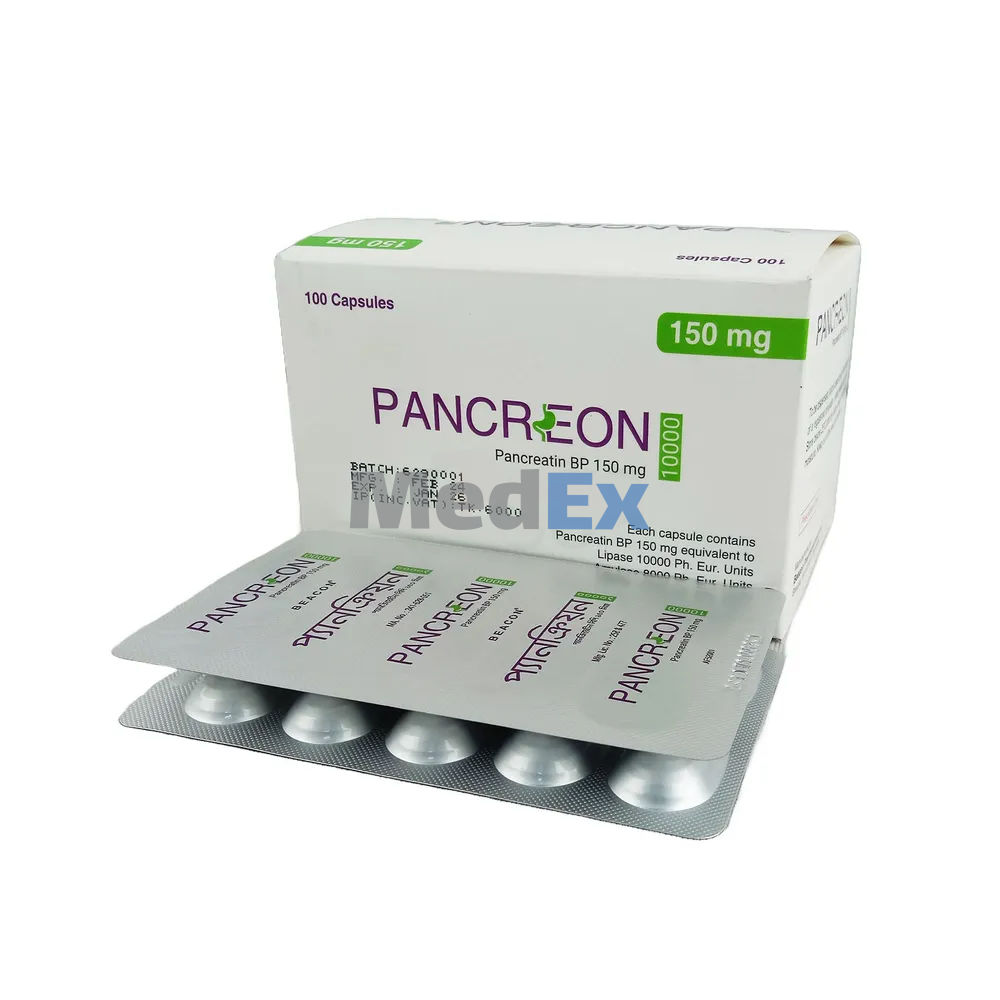
Pancreon 10000
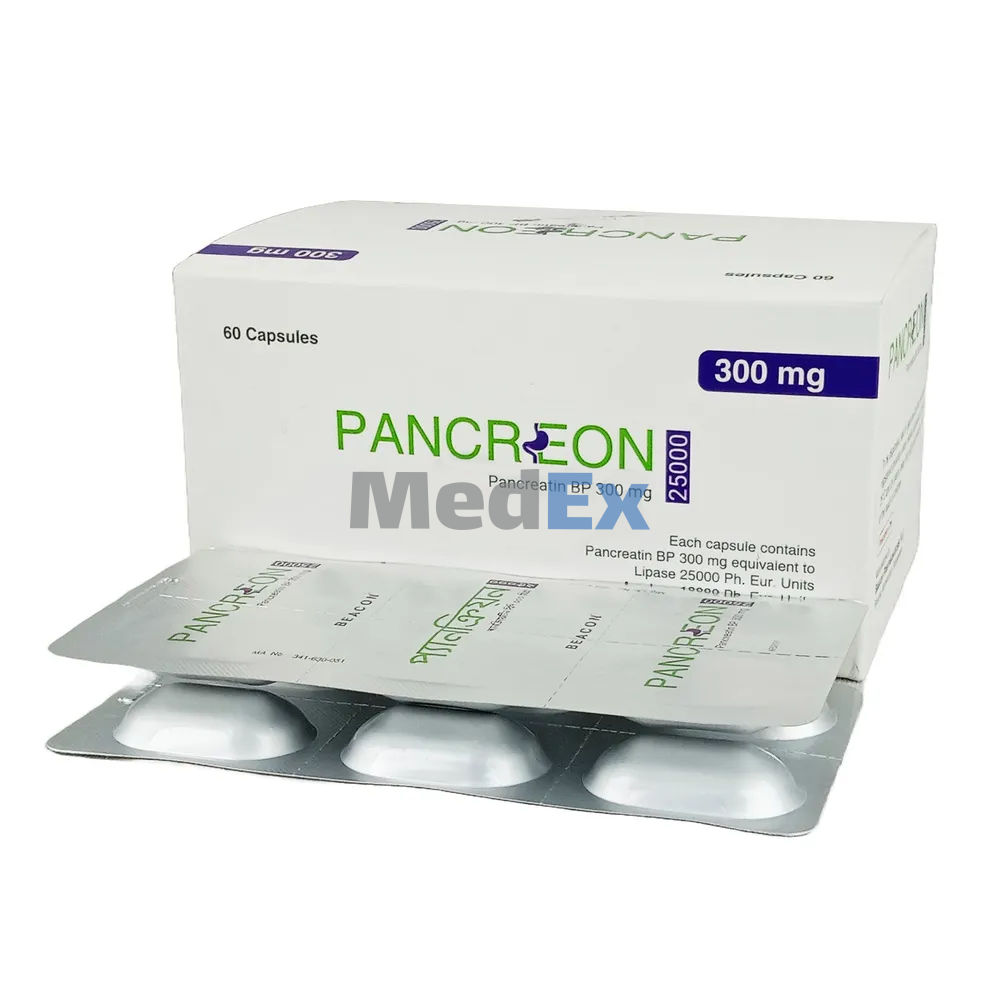
Pancreon 25000
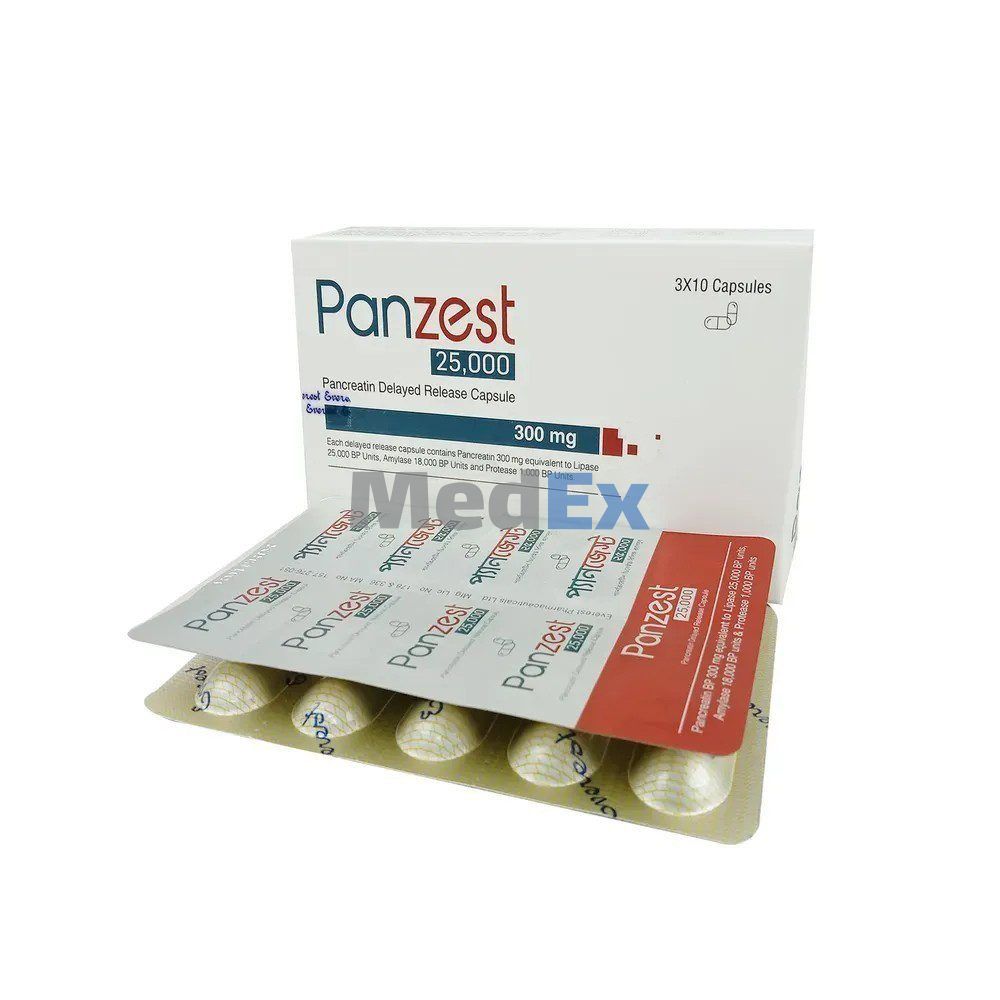
Panzest 25000
📖 Official Clinical Monograph
DGDA Approved Prescribing GuidelinesPancreon 10000 is indicated for the treatment of-
Exocrine pancreatic insufficiency due to cystic fibrosis
Chronic pancreatitis
Pancreatectomy or other conditions
Infants (up to 12 months)
: Infants may be given 2,000 to 4,000 lipase units per 120 mL of formula or per breast-feeding. Do not mix pancreatin capsule contents directly into formula or breast milk prior to administration.
Children older than 12 months and younger than 4 years
: Enzyme dosing should begin with 1,000 lipase units/kg of body weight per meal for children less than age 4 years to a maximum of 2,500 lipase units/kg of body weight per meal (or less than or equal to 10,000 lipase units/kg of body weight per day), or less than 4,000 lipase units/g fat ingested per day.
Children 4 years and older and adults
: Enzyme dosing should begin with 500 lipase units/kg of body weight per meal for those older than age 4 years to a maximum of 2,500 lipase units/kg of body weight per meal (or less than or equal to 10,000 lipase units/kg of body weight per day), or less than 4,000 lipase units/g fat ingested per day.
Administration
: Pancreatin is not interchangeable with any other pancrelipase product. Pancreatin should be swallowed whole. For infants or patients unable to swallow intact capsules, the contents may be administered without crushing or chewing, followed by fluid to ensure complete ingestion.
The most serious adverse reactions reported with different pancreatic enzyme products of the same active ingredient (pancrelipase) include fibrosing colonopathy, hyperuricemia and allergic reactions.
Fibrosing colonopathy: Fibrosing colonopathy has been reported following treatment with different pancreatic enzyme products.Fibrosing colonopathy is a rare, serious adverse reaction initially described in association with high-dose pancreatic enzyme use, usually over a prolonged period of time and most commonly reported in pediatric patients with cystic fibrosis.
Potential for Irritation to oral mucosa: Pancreon 10000 should not be crushed or chewed or mixed in foods having a pH greater than 4. These actions can disrupt the protective enteric coating resulting in early release of enzymes, irritation of oral mucosa, and/or loss or enzyme activity.
Potential for risk of hyperuricemia
Potential viral exposure from the product source
Allergic reaction
The pancreatic enzymes in pancreatin catalyze the hydrolysis of fats to monoglyceride, glycerol and free fatty acids, proteins into peptides and amino acids, and starches into dextrins and short chain sugars such as maltose and maltriose in the duodenum and proximal small intestine, thereby acting like digestive enzymes physiologically secreted by the pancreas.