Nilotinib
💊 Brand Formulations & Prices
5 brands sorted by unit price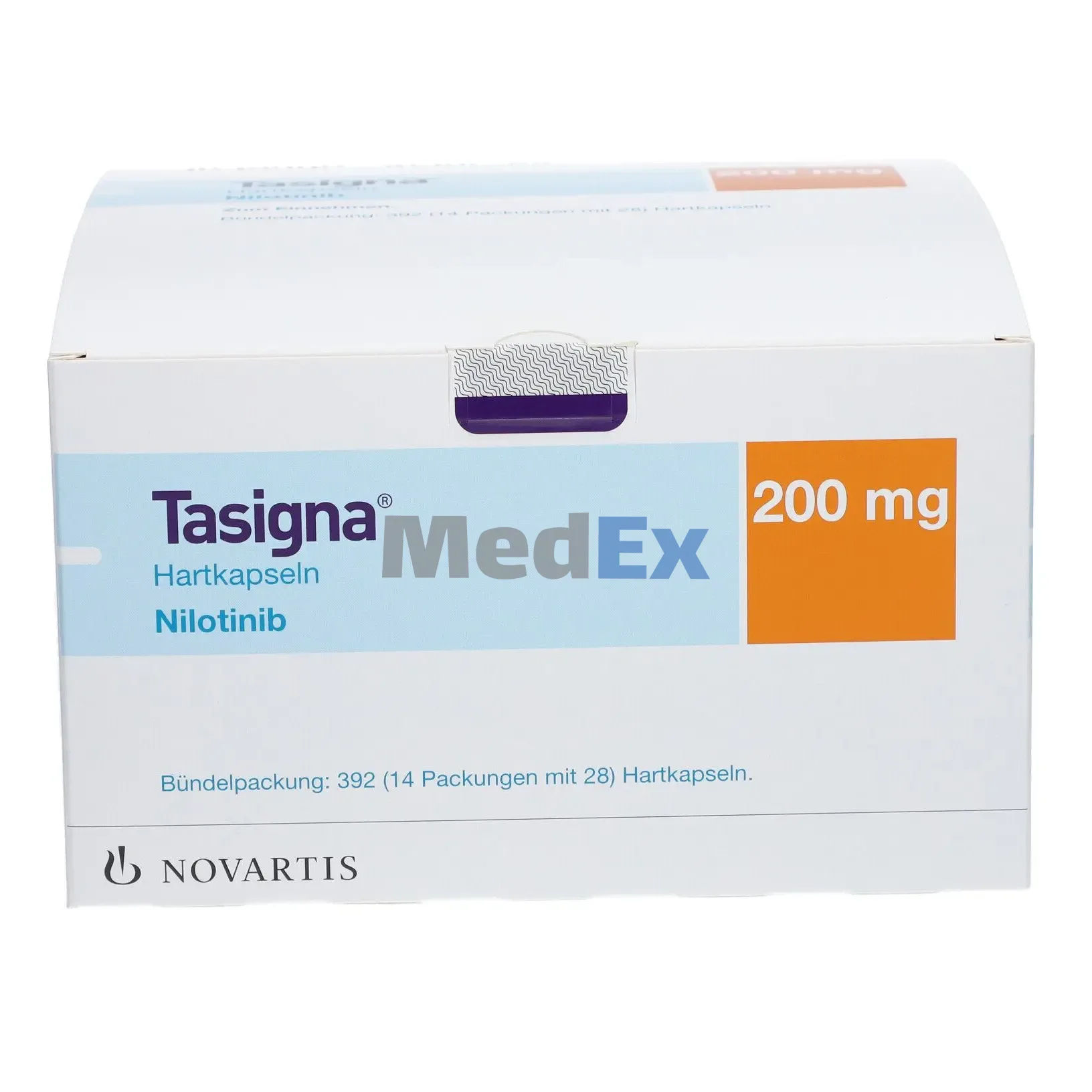
Tasigna
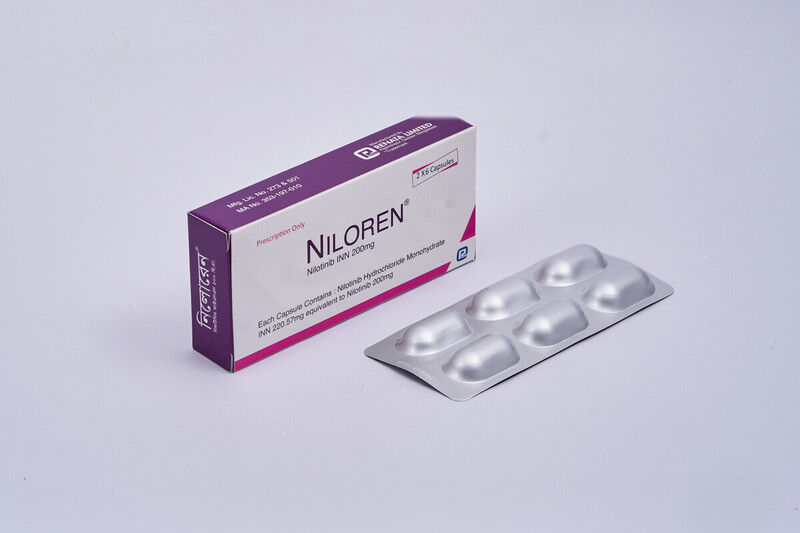
Niloren

Nilotin
Niloren
Nilotin
📖 Official Clinical Monograph
DGDA Approved Prescribing GuidelinesTreatment of newly diagnosed adult patients with Philadelphia chromosome positive chronic myeloid leukemia (Ph+ CML) in chronic phase. The study is ongoing and further data will be required to determine long-term outcome.
Treatment of chronic phase (CP) and accelerated phase (AP) Ph+ CML
... Read more
Treatment of newly diagnosed adult patients with Philadelphia chromosome positive chronic myeloid leukemia (Ph+ CML) in chronic phase. The study is ongoing and further data will be required to determine long-term outcome.
Treatment of chronic phase (CP) and accelerated phase (AP) Ph+ CML in adult patients resistant to or intolerant to prior therapy that included imatinib. Clinical benefit, such as improvement in disease-related symptoms or increased survival, has not been demonstrated.
Recommended Dose
: Newly diagnosed Ph+ CML-CP: 300 mg orally twice daily.
Resistant or intolerant Ph+ CML-CP and CML-AP
: 400 mg orally twice daily.
Administer Nilotinib approximately 12 hours apart and must not take with food. Swallow the capsules whole with water. Do not consume food for at least 2 hours before the dose is taken and for at least one hour after. Dose adjustment may be required for hematologic and non-hematologic toxicities, and drug interactions. A lower starting dose is recommended in patients with hepatic impairment (at baseline).
Patient with hypokalaemia, hypomagnesaemia or long QT syndrome. Concomitant use with potent CYP3A4 inhibitors or antiarrhythmics and other QT prolonging drugs. Concomitant use with potent CYP3A4 inducers.
Rash, pruritus, hepatotoxicity, headache, fever, fatigue, GI disturbances (nausea, constipation, diarrhoea), alopecia, asthenia, muscle spasms, arthralgia, myalgia, pain (e.g. musculoskeletal or chest pain), oedema, folliculitis, papilloma, insomnia, dizziness, vertigo, anxiety, paraesthesia, hyperhidrosis, dry skin, urticaria, acne, conjunctivitis, dry eye, flushing, dyspnoea, cough, myelosuppression (e.g. thrombocytopenia, neutropenia, and anaemia), thrombotic disorders or haemorrhage, arrhythmias, heart failure, pericarditis, palpitations, HTN, angina, MI; elevated AST/ALT, serum lipase; electrolyte imbalances.
Patient with history of pancreatitis, with total gastrectomy. Hepatic impairment. Maintain adequate hydration and correct uric acid levels, hypomagnesaemia, hypokalaemia and other electrolyte imbalances prior to therapy.
Chronic myelogenous leukaemia (CML) is caused by the BCR-ABL oncogene. Nilotinib inhibits the tyrosine kinase activity of the BCR-ABL protein. Nilotinib fits into the ATP-binding site of the BCR-ABL protein with higher affinity than imatinib, over-riding resistance caused by mutations. The ability of AMN107 to inhibit TEL-platelet-derived growth factor receptor-beta (TEL-PDGFRbeta), which causes chronic myelomonocytic leukaemia, and FIP1-like-1-PDGFRalpha, which causes hypereosinophilic syndrome, suggests potential use of AMN107 for myeloproliferative diseases characterised by these kinase fusions. AMN107 also inhibits the c-Kit receptor kinase, including the D816V-mutated variant of KIT, at pharmacologically achievable concentrations, supporting potential utility in the treatment of mastocytosis, and gastrointestinal stromal tumours.