 Oshud
OshudNeratinib Maleate
 Tyrosine Kinase Inhibitor
Brands & Prices (3)
📋 Indications & Uses Dosage & Administration⚠️ Contraindications⚡ Side Effects & Adverse Reactions🛡️ Warnings & Precautions🔬 Pharmacology & Mechanism
Tyrosine Kinase Inhibitor
Brands & Prices (3)
📋 Indications & Uses Dosage & Administration⚠️ Contraindications⚡ Side Effects & Adverse Reactions🛡️ Warnings & Precautions🔬 Pharmacology & Mechanism
Brand Formulations & Prices
3 brands sorted by unit price
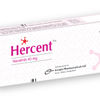

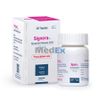
📖 Official Clinical Monograph
DGDA Approved Prescribing GuidelinesHercent is a kinase inhibitor indicated:
As a single agent, for the extended adjuvant treatment of adult patients with early-stage HER2-positive breast cancer, to follow adjuvant Trastuzumab based therapy.
In combination with Capecitabine, for the treatment of adult patients with advanced or metastatic HER2-positive breast cancer who have received two or more prior anti-HER2 based regimens in the metastatic setting.
Dosage & AdministrationPremedication for diarrhea
: When not using dose escalation, initiate loperamide with the first dose of Neratinib and continue during the first 56 days of treatment. After day 56, use loperamide to maintain 1–2 bowel movements per day.
Extended adjuvant treatment of early-stage breast cancer
: 240 mg (6 tablets) given orally once daily, with food, continuously until disease recurrence for up to one year.
Advanced or metastatic breast cancer
: 240 mg (6 tablets) given orally once daily with food on Days 1–21 of a 21-day cycle plus capecitabine (750 mg/m2 given orally twice daily) on Days 1–14 of a 21-day cycle until disease progression or unacceptable toxicities.
Dose escalation
: A two-week dose escalation for Neratinib may also be initiated.
Hepatic impairment
: Reduce starting dose to 80 mg in patients with severe hepatic impairment.
Dose Modifications-
Recommended starting dose: 240 mg daily
First dose reduction: 200 mg daily
Second dose reduction: 160 mg daily
Third dose reduction: 120 mg daily
It is contraindicated in patients with known hypersensitivity to Neratinib or any other components of this product.
The most common adverse reactions (reported in ≥5% of patients) were:
Hercent as a single agent
: diarrhea, nausea, abdominal pain, fatigue, vomiting, rash, stomatitis, decreased appetite, muscle spasms, dyspepsia, AST or ALT increased, nail disorder, dry skin, abdominal distention, epistaxis, weight decreased, and urinary tract infection.
Hercent in combination with capecitabine
: diarrhea, nausea, vomiting, decreased appetite, constipation, fatigue/asthenia, weight decreased, dizziness, back pain, arthralgia, urinary tract infection, upper respiratory tract infection, abdominal distention, renal impairment, and muscle spasms.
Diarrhea
: Diarrhea should be managed through either Hercent dose escalation or loperamide prophylaxis. If diarrhea occurs despite recommended prophylaxis, treat with additional antidiarrheals, fluids, and electrolytes as clinically indicated. Withhold Hercent in patients experiencing severe and/or persistent diarrhea. Hercent should be Permanently discontinued in patients experiencing Grade 4 diarrhea or Grade ≥2 diarrhea that occurs after maximal dose reduction.
Hepatotoxicity
: Hercent should be Withhold in patients experiencing Grade 3 liver abnormalities and permanently discontinue Hercent in patients experiencing Grade 4 liver abnormalities.
Embryo-Fetal Toxicity
: Hercent can cause fetal harm. Should Advise patients of potential risk to a fetus and to use effective contraception
Neratinib is a kinase inhibitor that irreversibly binds to Epidermal Growth Factor Receptor (EGFR), Human Epidermal Growth Factor Receptor 2 (HER2), and HER4. Neratinib is a member of the 4-anilino quinolidine class of protein kinase inhibitors.