Methoxsalen
💊 Brand Formulations & Prices
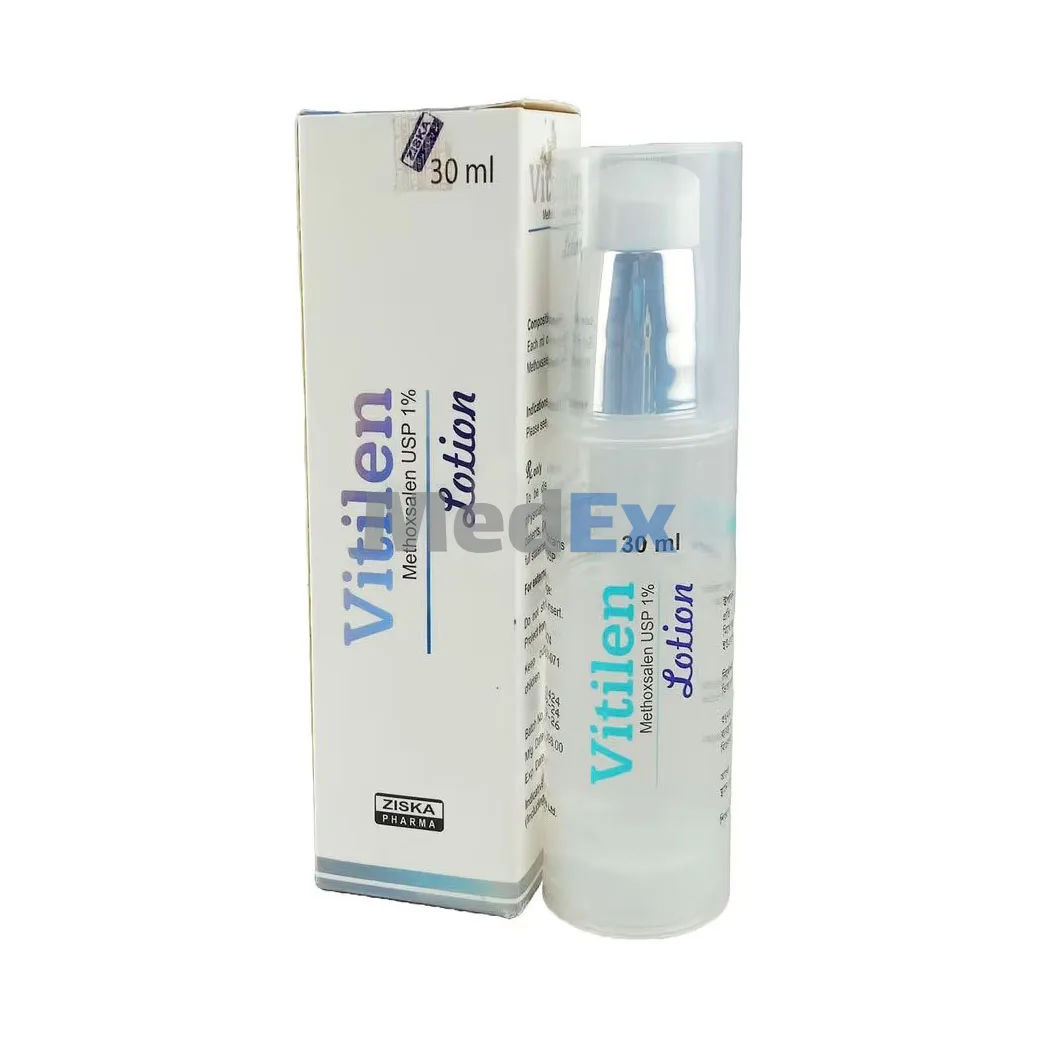
2 brands sorted by unit price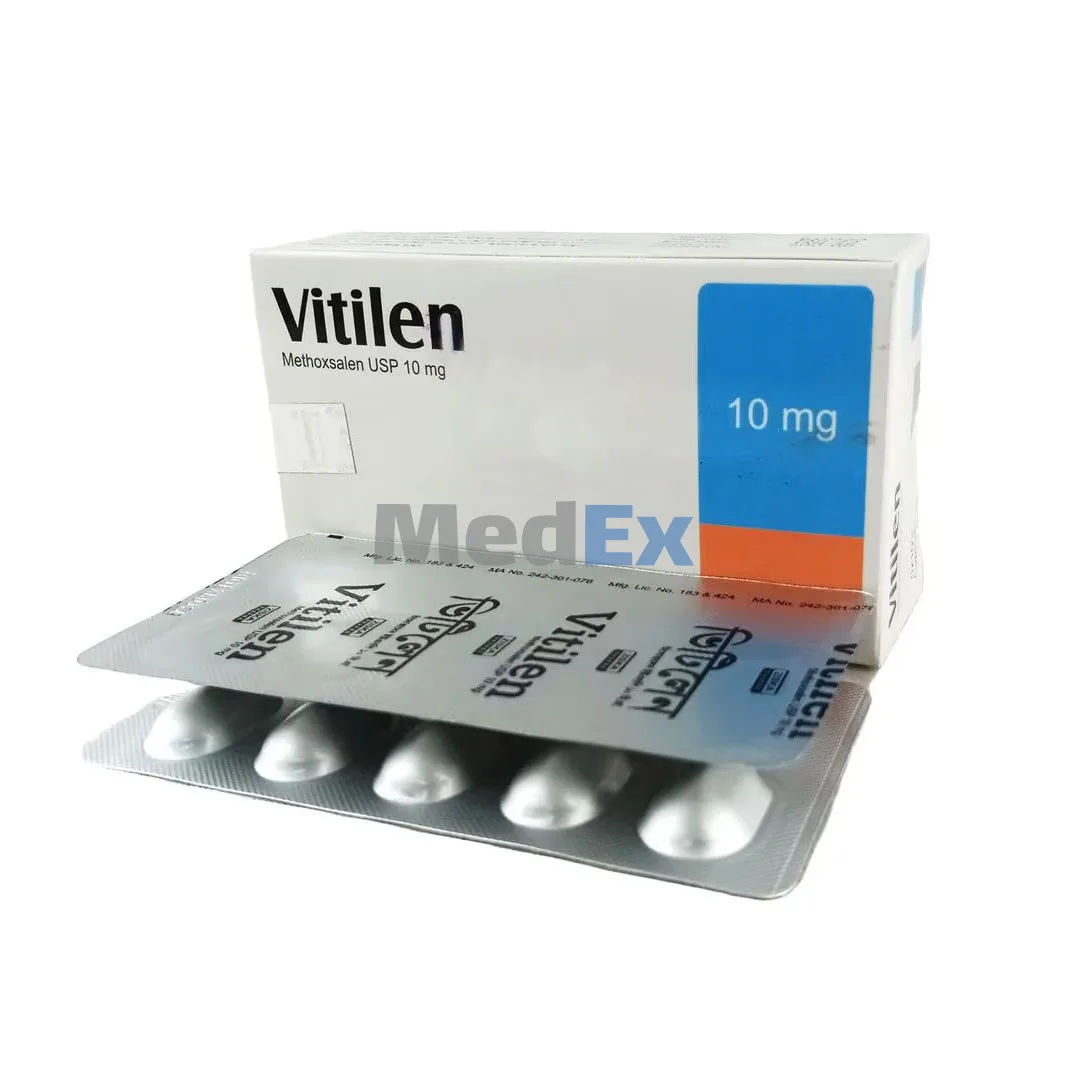
📖 Official Clinical Monograph
DGDA Approved Prescribing GuidelinesIt is indicated for the repigmentation of idiopathic vitiligo. It is also indicated for the symptomatic control of severe, recalcitrant, disabling psoriasis not adequately responsive to other forms of therapy and when the diagnosis has been supported by biopsy.
Patient with idiosyncratic reactions to psoralen compounds
Patient possessing light sensitive disease including lupus erythematosus, porphyria, erythropoietic protoporphyria, variegate porphyria, xeroderma pigmentosum and albinism
Patient with melanoma or possessing a history of melanoma
Patient with invasive squamous cell carcinomas
Patient with aphakia
The most commonly reported side effect of Vitilen alone is nausea, which occurs with approximately 10% of all patients. This effect may be minimized or avoided by instructing the patient to take Vitilen with milk or food, or to divide the dose into two portions, taken approximately one-half hour apart. Other effects include nervousness, insomnia and psychological depression.
Skin burning
: Serious burns from either UVA or sunlight (even through window glass) can result if the recommended dosage of the drug and/or exposure schedules are not maintained.
Carcinogenicity
: The increasing risk of carcinoma appears great among patients who are fair skinned or had pre PUVA exposure or prolong treatment with tar UVB, ionizing radiation or arsenic.
Cataractogenicity
: Among patients using proper eye protection, there is no evidence for a significantly increased risk of cataracts in association with PUVA therapy.
Patients must not sunbathe during the 24 hours prior to Vitilen ingestion and UV exposure.
The combination treatment regimen of Psoralen (P) and UVA (Ultraviolet radiation of 320-400 nm wavelength) is commonly known as PUVA. Skin reactivity to UVA radiation is enhanced by the ingestion of Methoxsalen. The drug reaches its maximum bioavailability 1-3 hours after oral administration and may last for up to 8 hours. Methoxsalen is reversibly bound to serum albumin and is also preferentially taken up by epidermal cells. In both mice and man, Methoxsalen is rapidly metabolized. Approximately 95% of the drug is excreted as a series of metabolites in the urine within 24 hours.
The exact mechanism of action of Methoxsalen with the epidermal melanocytes and keratinocytes is not known. The best known biochemical reaction of Methoxsalen is with DNA. Methoxsalen, upon photoactivation, conjugates and forms covalent bonds with DNA (both monofunctional and bifunctional). Reactions with proteins have also been described.