Hydroxyurea
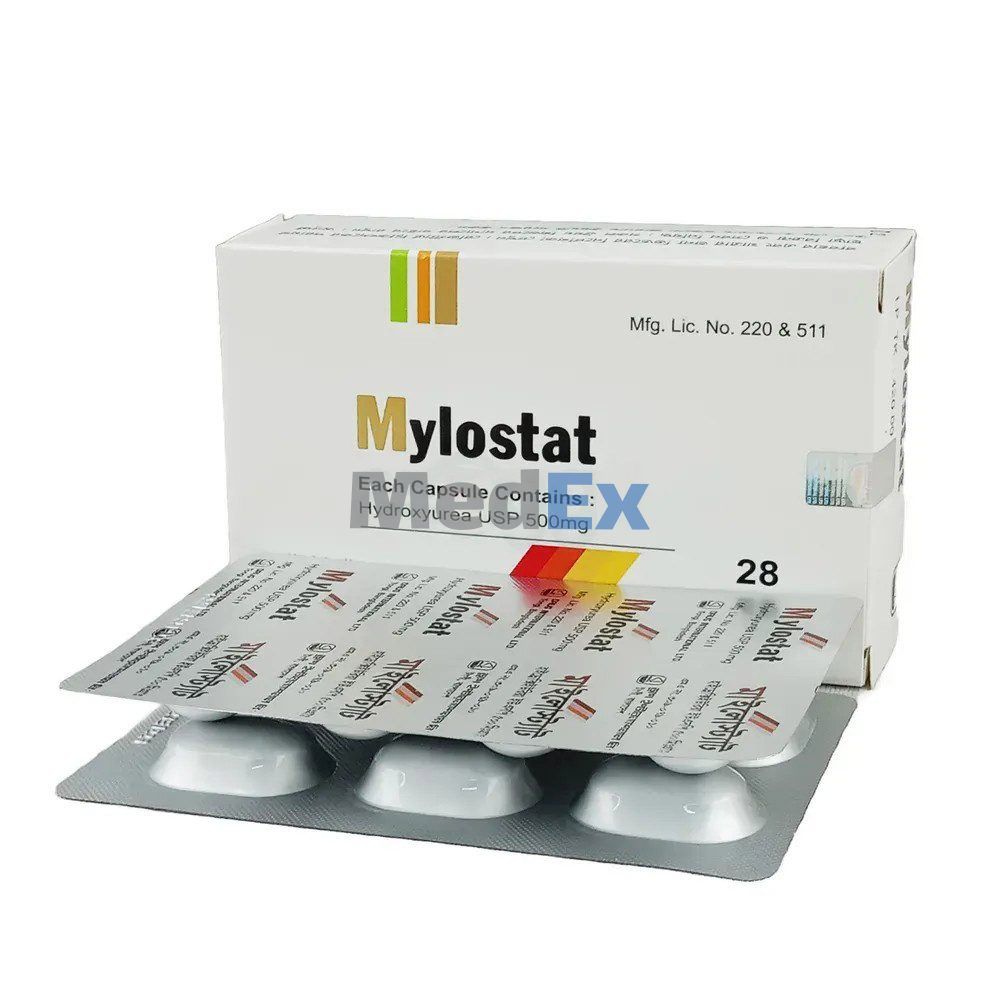
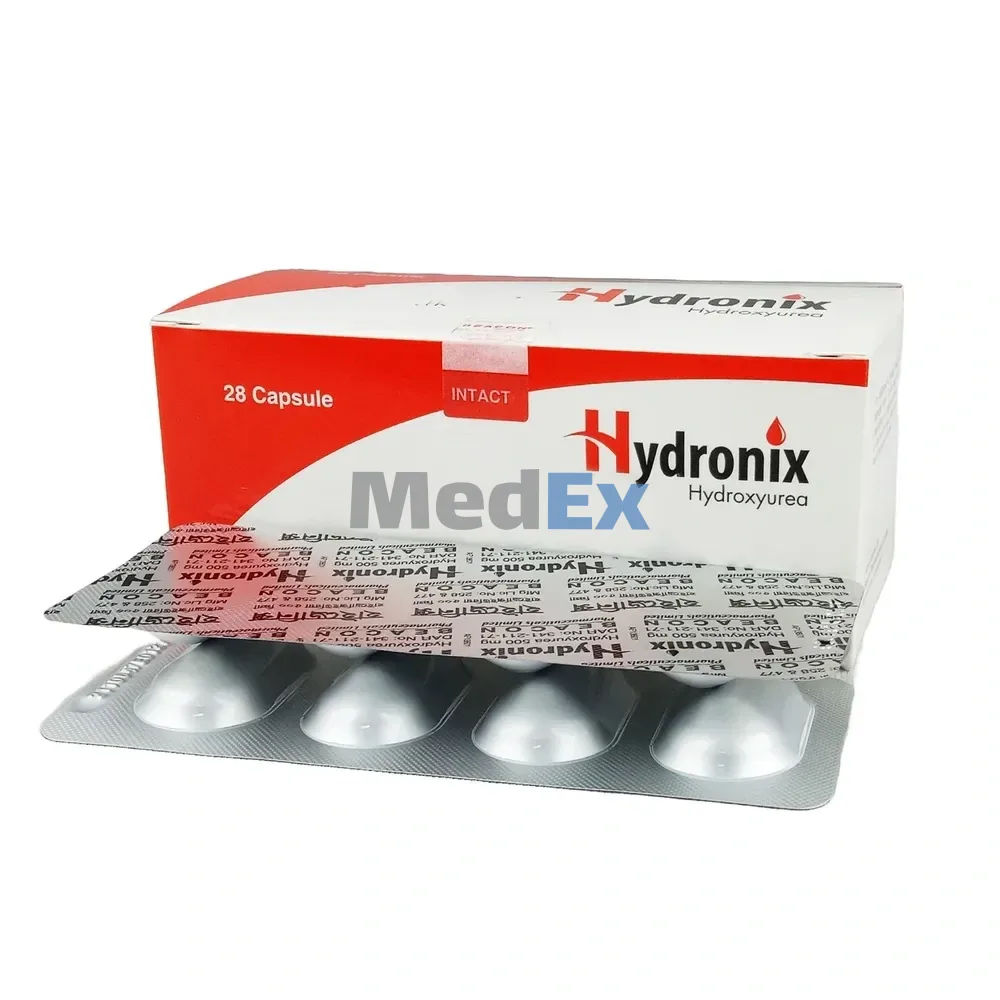
💊 Brand Formulations & Prices
3 brands sorted by unit price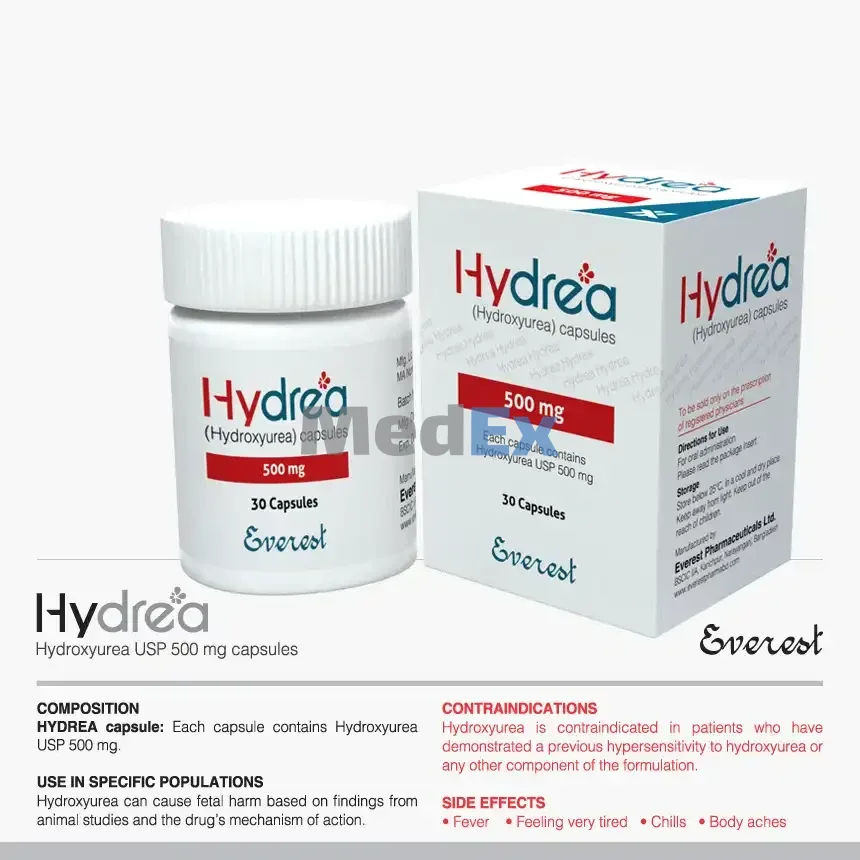
📖 Official Clinical Monograph
DGDA Approved Prescribing GuidelinesHydrea is indicated for the treatment of:
Polycythaemia vera
Essential thrombocythemia
Sickle cell anemia
Resistant chronic myeloid leukemia
Locally advanced squamous cell carcinomas of the head and neck in combination with chemoradiation.
Polycythaemia Vera
: Administer 15-20 mg/kg orally once daily.
Essential Thrombocythemia
: Administer 15 mg/kg orally once daily.
Solid Tumors
- Intermittent Therapy: Administer 80 mg/kg orally every three days. Continuous Therapy: Administer 20-30 mg/kg orally once daily (qDay)
Head & Neck Tumors
: Start 80 mg/kg orally every three days (q3days) seven days before initiating irradiation.
Chronic Myelocytic Leukemia, Resistant
: Administer 20-40 mg/kg orally once daily.
Sickle Cell Disease
: Initiate at 15 mg/kg/day as a single dose; monitor blood cell counts every two weeks. Titrate by 5 mg/kg/day every 12 weeks, but do not exceed 35 mg/kg/day.
Hydroxyurea is contraindicated in patients who have demonstrated a previous hypersensitivity to hydroxyurea or any other component of the formulation.
Fever
Feeling very tired
Chills
Shortness of breath
Body aches
Bleeding or unexplained bruising
Myelosuppression
: Hydrea causes severe myelosuppression. Treatment with Hydrea should not be initiated if bone marrow function is markedly depressed. Bone marrow suppression may occur, and leukopenia is generally its first and most common manifestation. Some patients, treated at the recommended initial dose of 15 mg/kg/day, have experienced severe or life-threatening myelosuppression.
Malignancies
: Hydrea is a human carcinogen. In patients receiving long-term Hydrea for myeloproliferative disorders, secondary leukemia has been reported. Skin cancer has also been reported in patients receiving long-term Hydrea. Advise protection from sun exposure and monitor for the development of secondary malignancies.
Embryo-Fetal Toxicity
: Based on the mechanism of action and findings in animals, Hydrea can cause fetal harm when administered to a pregnant woman.
Hydroxyurea is converted to a free radical nitroxide (NO) in vivo, and transported by diffusion into cells where it quenches the tyrosyl free radical at the active site of the M2 protein subunit of ribonucleotide reductase, inactivating the enzyme. The entire replicase complex, including ribonucleotide reductase, is inactivated and DNA synthesis is selectively inhibited, producing cell death in S phase and synchronization of the fraction of cells that survive. Repair of DNA damaged by chemicals or irradiation is also inhibited by hydroxyurea, offering potential synergy between hydroxyurea and radiation or alkylating agents. Hydroxyurea also increases the level of fetal hemoglobin, leading to a reduction in the incidence of vasoocclusive crises in sickle cell anemia. Levels of fetal hemoglobin increase in response to activation of soluble guanylyl cyclase (sGC) by hydroxyurea-derived NO.