Glipizide
💊 Brand Formulations & Prices
7 brands sorted by unit price
Diapizi
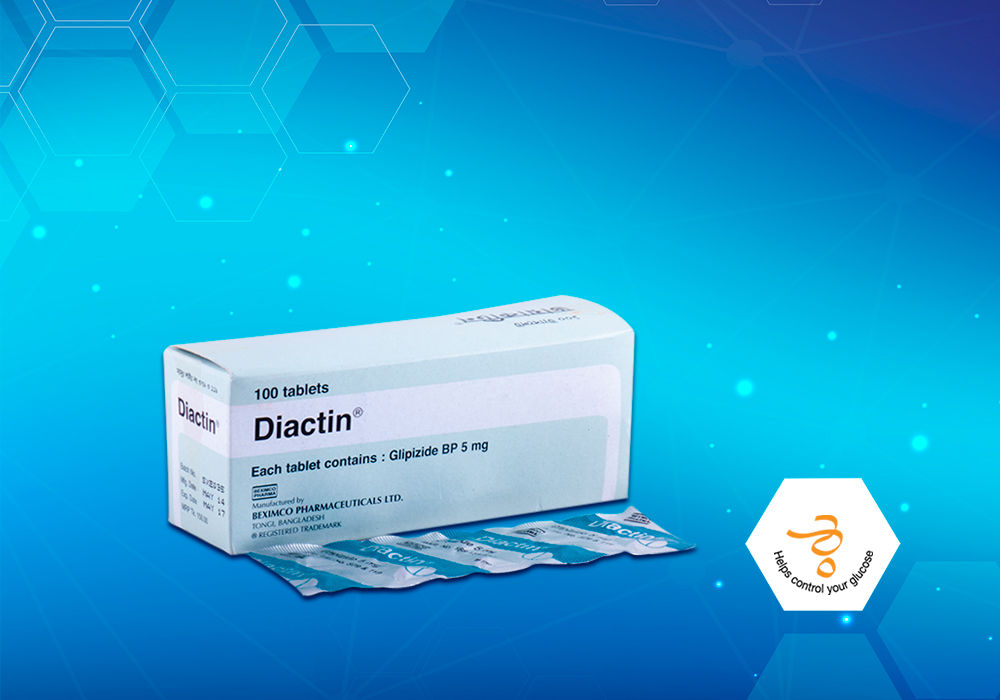
Diactin
Diapizi
Diaplus
Pizide
Diaplus XR
Glimerol
📖 Official Clinical Monograph
DGDA Approved Prescribing GuidelinesDiactin is indicated as an adjunct to diet for the control of hyperglycaemia and its associated symptomatology in the treatment of non-insulin-dependent diabetes mellitus (NIDDM type II) when diet modification has not been proved effective on its own. In certain patients who are receiving insulin
... Read more
Diactin is indicated as an adjunct to diet for the control of hyperglycaemia and its associated symptomatology in the treatment of non-insulin-dependent diabetes mellitus (NIDDM type II) when diet modification has not been proved effective on its own. In certain patients who are receiving insulin, the concurrent use of Diactin would allow a reduction in the daily dose of insulin.
Use of Diactin must be viewed by both the physician and patient as a treatment in addition to diet and not as a substitute for diet or as a convenient mechanism for avoiding dietary restraint. Furthermore, short term administration may be required if diet control alone results in transient control of blood glucose level.
During maintenance, if satisfactory lowering of blood glucose is no longer achieved, use of Diactin should be discontinued.
Like any other oral hypoglycaemic agent, dosage of Glipizide is not fixed and may be adjusted through periodic monitoring of blood glucose level. Short term administration of Glipizide may be sufficient during periods of transient loss of control of blood glucose in patients, usually controlled well on diet.
In general, Glipizide should be given approximately 30 minutes before a meal to achieve the maximum reduction in postprandial hyperglycaemia.
Initial dose
: The recommended starting dose is 5 mg, given before breakfast. Geriatric patients or those with liver disease may be started on 2.5 mg.
Dosage adjustments
: Dosage adjustment may be done at intervals of several days by an increment of 2.5-5 mg, as determined by blood glucose response. If response to a single dose is not satisfactory, dividing that dose might prove effective. The maximum recommended once daily dose is 15 mg. Doses above 15 mg should ordinarily be divided and given before meals of adequate calorie content. The maximum recommended total daily dose is 40 mg.
Maintenance
: Some patients may be effectively controlled on a once daily regimen, while others show better response with divided dosing. Total daily dose above 30 mg have been safely given on bid basis to long term patients. Patients can usually be stabilized on a dosage ranging from 2.5 to 30 mg daily.
In elderly, debilitated or malnourished patients, and patients with impaired renal or hepatic function:
The initial and maintenance dosing should be conservative to avoid hypoglycaemic reactions.
Patients receiving insulin
: Many stable non-insulin-dependent diabetic patients receiving Insulin may be safely placed on Glipizide if the physician decides to do so.
Patients receiving other oral hypoglycaemic agents
: As with other sulphonylurea, no transition period is necessary while transferring patients to Glipizide. Patients should be observed carefully for any possible hypoglycaemic effect due to overlapping of drug effects.
Pediatric Use
: Safety and effectiveness in children have not been established.
Glipizide is contraindicated in the following conditions :
Patients who are hypersensitive to Glipizide or any component of the product
Juvenile onset diabetes
Severe or unstable ‘brittle’ diabetes
Diabetes complicated by ketosis and acidosis, major surgery, severe sepsis or severe trauma
Severe renal, hepatic or thyroid impairment, co-existent renal and hepatic disease
The majority of side effects have been dose related, transient, and responded to dose reduction or withdrawal of the medication.
Gastrointestinal
: Gastrointestinal complaints were reported with the following approximate incidences like nausea, diarrhoea, constipation and gastralgia. They appear to be dose related and usually disappear on division or reduction of dosage. Cholestatic jaundice may occur rarely with these kind of drugs and Diactin should be discontinued if this occurs.
Dermatological
: Allergic skin reactions including erythema, morbilliform or maculopapular eruption, urticaria, pruritus and eczema have been reported. They frequently disappear with continued therapy. However, if they persist, the drug should be discontinued.
Haematologic
: Leucopenia, agranulocytosis, thrombocytopenia, haemolytic anaemia, aplastic anaemia and pancytopenia have been reported with sulphonylureas.
Metabolic
: Hepatic porphyria and disulphiram like reactions have been reported with sulphonylurea.
Endocrine reactions
: Cases of hyponatraemia and the syndrome of inappropriate antidiuretic hormone (SIADH) secretion have been reported with this and other sulphonylureas.
Miscellaneous
: Dizziness, drowsiness and headache have been reported in patients treated with Diactin. They are usually transient and seldom require discontinuation of therapy.
Hypoglycaemia
: All sulphonylurea drugs are capable of producing severe hypoglycaemia. Proper patient selection, dosage and instructions are important to avoid hypoglycaemic episodes. Renal or hepatic insufficiency may cause elevated blood levels of Diactin and the latter may also diminis gluconeogenic capacity, both of which increase the risk of serious hypoglycaemic reactions. Elderly, debilitated or malnourished patients and those with adrenal or pituitary insufficiency are particularly susceptible to the hypoglycaemic actions of glucose lowering drugs. Patients should be instructed to take their meals regularly and not to exercise excessively without additional calorie intake.
Renal and hepatic disease
: The metabolism and excretion of Diactin may be slowed in patients with impaired renal and/or hepatic function. These patients may suffer from prolonged hypoglycaemia and appropriate measures should be instituted.
Loss of control on blood glucose
: When a patient stabilized on any antidiabetic regimen is exposed to stress such as fever, trauma, infection or surgery, a loss of control on blood glucose may occur. At that time it may be necessary to discontinue Diactin and administer Insulin.
The effectiveness of any oral hypoglycaemic drug including Diactin, in lowering blood glucose to a desired level, decreases in many patients over a period of time, which may be due to secondary failure, i.e., progression of the severity of the diabetes or diminished responsiveness to the drug.
Glipizide lowers blood glucose by stimulating the release of insulin from the pancreas, an effect dependent upon functioning beta cells. The extrapancreatic effects of Glipizide are increase in insulin sensitivity and decrease in hepatic glucose production.