Glibenclamide
💊 Brand Formulations & Prices
5 brands sorted by unit price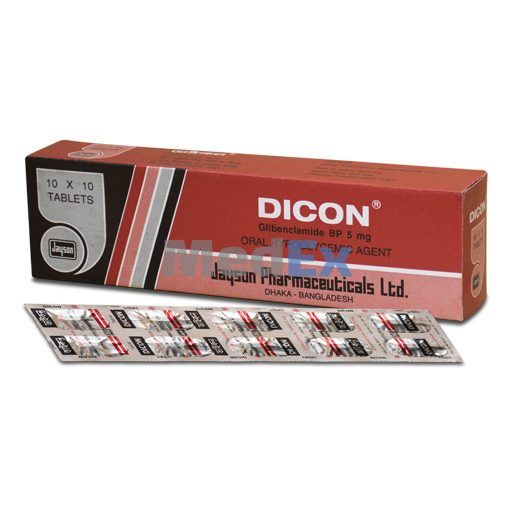
Dicon
Gluconil
Suganil
Glucon
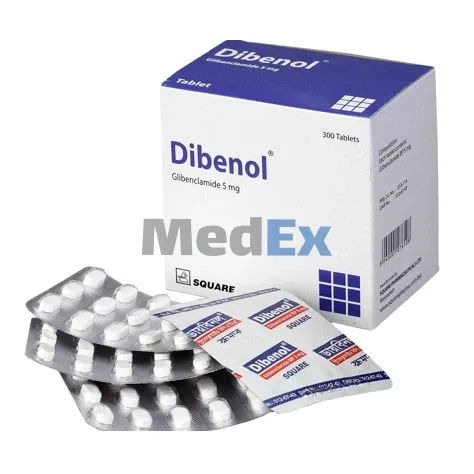
Dibenol
📖 Official Clinical Monograph
DGDA Approved Prescribing GuidelinesDibenol is indicated as an adjunct to diet and exercise to improve glycemic control in adults with type 2 diabetes mellitus.
There is no fixed dosage regimen for the management of diabetes mellitus with Glibenclamide or any other hypoglycemic agent. The usual starting dose of Glibenclamide as initial therapy is 2.5 to 5 mg daily, administered with breakfast or the first main meal.Those patients who may be more sensitive to hypoglycemic drugs should be started at 1.25 mg daily.The usual maintenance dose is in the range of 1.25 to 20 mg daily, which may be given as a single dose or in divided doses. Dosage increases should be made in increments of no more than 2.5 mg at weekly intervals based upon the patient's blood glucose response. Daily doses of more than 20 mg are not recommended.
Glibenclamide is contraindicated in patients:
With known hypersensitivity to the drug or any of its excipients.
With type 1 diabetes mellitus or diabetic ketoacidosis, with or without coma. These conditions should be treated with insulin.
Severe hypoglycemic reactions with coma, seizure, or other neurological impairment occur infrequently.
All sulfonylurea drugs are capable of producing severe hypoglycemia. Proper patient selection, dosage, and instructions are important to avoid hypoglycemic episodes.
Glibenclamide appears to lower the blood glucose acutely by stimulating the release of insulin from the pancreas, an effect dependent upon functioning beta cells in the pancreatic islets. The mechanism by which Glibenclamide lowers blood glucose during long-term administration has not been clearly established. With chronic administration of Glibenclamide in Type 2 diabetic patients, the blood glucose lowering effect persists despite a gradual decline in the insulin secretory response to the drug. In addition to its blood glucose lowering actions, Glibenclamide produces a mild diuresis by enhancement of renal free water clearance.