 Oshud
OshudGemifloxacin
 4-Quinolone preparations
Brands & Prices (20)
📋 Indications & Uses Dosage & Administration⚠️ Contraindications⚡ Side Effects & Adverse Reactions🛡️ Warnings & Precautions🔬 Pharmacology & Mechanism
4-Quinolone preparations
Brands & Prices (20)
📋 Indications & Uses Dosage & Administration⚠️ Contraindications⚡ Side Effects & Adverse Reactions🛡️ Warnings & Precautions🔬 Pharmacology & Mechanism
Brand Formulations & Prices
20 brands sorted by unit price

Gemitab
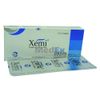
Xemi
Factiq

Gefcin

Gelcin
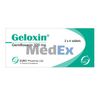
Geloxin

Gemicin
Geminox
Gemiquin
Kmi
Leogem
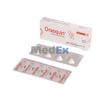
Orasquin
Rtnor
Toplon
Gemelon
Facticin
Geoflox
Gemif

Flogem

Gemiflox
📖 Official Clinical Monograph
DGDA Approved Prescribing GuidelinesFacticin is indicated for the treatment of the following bacterial infections in adults caused by sensitive organisms as follows-
Acute bacterial exacerbation of chronic bronchitis
: caused by Streptococcus pneumoniae, Haemophilus influenzae, Haemophilus parainfluenzae, or Moraxella catarrhalis.
... Read more
Facticin is indicated for the treatment of the following bacterial infections in adults caused by sensitive organisms as follows-
Acute bacterial exacerbation of chronic bronchitis
: caused by Streptococcus pneumoniae, Haemophilus influenzae, Haemophilus parainfluenzae, or Moraxella catarrhalis.
Community-acquired pneumonia (of mild to moderate severity)
: caused by Streptococcus pneumoniae (including multi-drug resistant strains), Haemophilus influenzae, Moraxella catarrhalis, Mycoplasma pneumoniae, Chlamydia pneumoniae, or Klebsiella pneumoniae.
Dosage & AdministrationAcute bacterial exacerbation of chronic bronchitis: 320 mg once daily for 5 days.
Community-acquired pneumonia (Mild to moderate severity):
Due to known or suspected S. pneumoniae, H. influenzae, M. pneumoniae, or C. pneumoniae infection: One 320 mg tablet daily for 5 days.
Due to known or suspected multi-drug resistant Streptococcus pneumoniae, K.pneumoniae, or M. catarrhalis infection: One 320 mg tablet daily for 7 days.
Known hypersensitivity to Gemifloxacin and other quinolones, Patients who have previously suffered tendon damage with fluoroquinolones. Gemifloxacin should not be used in children under 18 years of age.
The general adverse events include abdominal pain, diarrhea, headache, nausea, rash and vomiting. Some side effects have been infrequently reported such as fungal overgrowth in body, dizziness and insomnia, urticaria, pruritis and a maculopapular erythmatous skin rash.
For patients with severe impairment of renal function, alteration of the dosage regimen to 160 mg once daily is necessary. Adequate hydration of patients receiving Facticin should be maintained to prevent the formation of a highly concentrated urine and crystalluria. Facticin may cause dizziness; if this occurs, patients should not operate an automobile or machinery or engage in activities requiring mental alertness or co-ordination.
Tendinitis and tendon ruptures may occur in any age group during treatment with quinolones, including Facticin, but particularly in elderly patients or when corticosteroids are being co-administered. Facticin should be discontinued if tendinitis is suspected or at the first sign of pain or inflammation and the affected limb should be rested. In clinical studies with Facticin a small mean increase in QTc interval was observed. Facticin should be used with caution in patients predisposed to QTc interval prolongation or in patients taking other medications that are known to prolong the QTc interval. Facticin should be used with caution in patients with epilepsy.
Gemifloxacin is a fluoroquinolone antibiotic. It is bactericidal with minimum bactericidal concentrations. Gemifloxacin acts by inhibiting DNA synthesis through inhibition of the bacterial type II topoisomerases, DNA gyrase, and/or topoisomerase IV (TOPO IV) which are both essential for bacterial growth.
Gemifloxacin is rapidly absorbed after oral administration. It is widely distributed throughout the body. Studies in healthy subjects showed that gemifloxacin is distributed rapidly into target tissues and body fluids such as the lung (epithelial lining fluid, alveolar macrophages, bronchial tissue) and nasal secretions.
Following oral administration of gemifloxacin, approximately 36% and 61% of the dose is excreted in the urine and feces, respectively, as unchanged drug and metabolites. AUC values were generally only slightly higher (approx. 10%) in women than in men. No dose adjustment is required based on gender