Fruquintinib
💊 Brand Formulations & Prices
1 brands sorted by unit price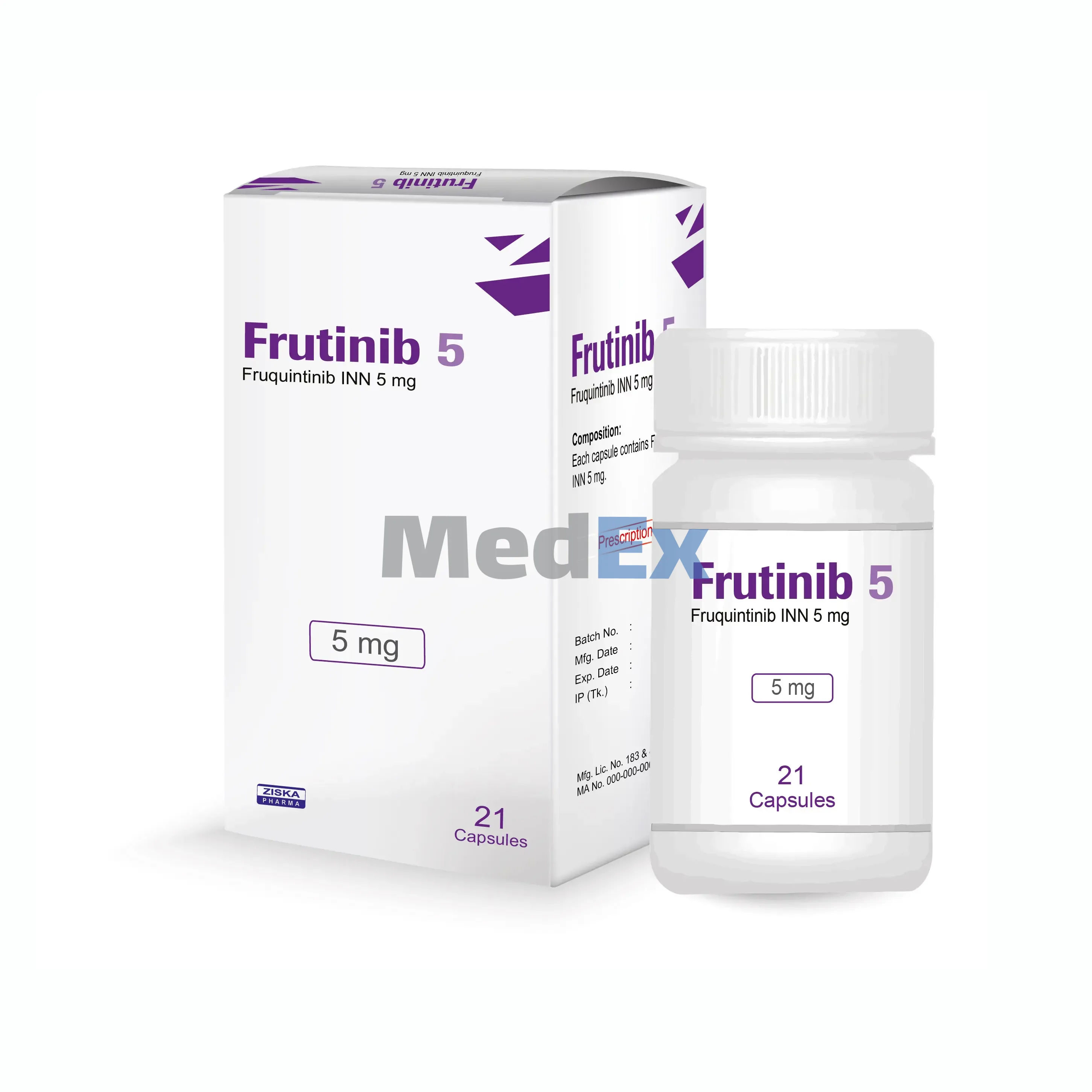
📖 Official Clinical Monograph
DGDA Approved Prescribing GuidelinesFrutinib is a kinase inhibitor indicated for the treatment of adult patients with metastatic colorectal cancer (mCRC) who have been previously treated with fluoropyrimidine, oxaliplatin, and irinotecan-based chemotherapy, an anti-VEGF therapy, and, if RAS wild type and medically appropriate, an anti-EGFR therapy.
The recommended dose of Fruquintinib is 5 mg orally once daily for the first 21 days of each 28-day cycle until disease progression or unacceptable toxicity. Take Fruquintinib with or without food at approximately the same time each day. Swallow the Fruquintinib capsule whole. Take a missed dose if less than 12 hours have passed since the missed scheduled dose. Do not take two doses on the same day to make up for a missed dose. Do not take an additional dose if vomiting occurs after taking Fruquintinib but continue with the next scheduled dose.
Dose Modification
: Recommended Dose Reductions for Fruquintinib. First dose reduction 4 mg orally once daily. Second dose reduction 3 mg orally once daily. Permanently discontinue Fruquintinib in patients unable to tolerate 3 mg orally once daily.
The following clinically significant adverse reactions are described elsewhere in the labeling:
Hypertension
Hemorrhagic Events
Infections
Gastrointestinal Perforation
Hepatotoxicity
Proteinuria
Palmar-Plantar Erythrodysesthesia (PPE)
Posterior Reversible Encephalopathy Syndrome (PRES)
Hypertension
: Frutinib can cause hypertension. Do not initiate Frutinib unless blood pressure is adequately controlled. Monitor blood pressure weekly the first month, at least monthly thereafter.
Hemorrhagic Events
: Frutinib can cause serious hemorrhagic events, which may be fatal. Permanently discontinue Frutinib in patients with severe or life-threatening hemorrhage.
Infections
: Frutinib can cause an increased risk of infections, including fatal infections.
Fruquintinib is a small molecule kinase inhibitor of vascular endothelial growth factor receptors (VEGFR)-1, -2, and -3 with IC50 values of 33, 35, and 0.5 nM, respectively. In vitro studies showed fruquintinib inhibited VEGF-mediated endothelial cell proliferation and tubular formation. In vitro and in vivo studies showed fruquintinib inhibited VEGF-induced VEGFR-2 phosphorylation. In vivo studies showed fruquintinib inhibited tumor growth in a tumor xenograft mouse model of colon cancer.