 Oshud
OshudFlecainide Acetate
 Brands & Prices (1)
📋 Indications & Uses Dosage & Administration⚠️ Contraindications⚡ Side Effects & Adverse Reactions🛡️ Warnings & Precautions🔬 Pharmacology & Mechanism
Brands & Prices (1)
📋 Indications & Uses Dosage & Administration⚠️ Contraindications⚡ Side Effects & Adverse Reactions🛡️ Warnings & Precautions🔬 Pharmacology & Mechanism
Brand Formulations & Prices
1 brands sorted by unit price
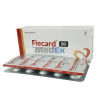
📖 Official Clinical Monograph
DGDA Approved Prescribing GuidelinesFlecard tablets belong to a group of medicines called anti-arrhythmics. Anti-arrhythmics work by controlling the rate and rhythm of the heart. Flecard tablets are used to treat:
Arrhythmias (irregular heart beat)
Tachycardia (heart beating too fast)
Atrial fibrillation (rapid contractions of muscles in the heart).
It is important for your doctor to treat these conditions quickly and effectively in order to prevent more serious heart problems from developing.
Dosage & AdministrationSupraventricular arrhythmias
(Irregular heart beat that starts in the upper chambers of your heart): The recommended dose is one 50 mg tablet twice a day. Your doctor may prescribe up to a total dose of 300 mg daily.
Ventricular arrhythmias
(Irregular heart beat that starts in the lower chambers of your heart): The recommended dose is 100 mg tablet twice a day. Your doctor may prescribe up to a total dose of 400 mg daily.
For elderly patients, and patients with kidney or heart problems, the doctor may tell you to take a lower dose.
While you are taking this medicine, your doctor may ask you to have check-ups. These are to make sure that your medicine is working properly and that the dose you are taking is right for you.
Use in Children
: Flecainide Acetate tablets are not recommended for children under 12 years of age, However, dairy products such as milk, infant formula and possibly yoghurt, may reduce how much flecainide acetate is absorbed in children and infants.
Do not take Flecainide Acetate tablets if you:
are allergic to flecainide acetate or any of the other ingredients of this medicine
have heart failure
have cardiogenic shock (your heart is unable to pump as much blood as your body needs)
have heart block (your heart misses beats)
have long-standing atrial fibrillation (rapid contractions of muscles in the heart)
have or have ever had any heart problems including problems with the valves in your heart or conduction problems
have sinus node dysfunction (a specific condition where your heart beats abnormally)
have had a myocardial infarction (heart attack)
have Brugada Syndrome, a genetic disease that causes severe disturbances of the rhythm of the heart and may lead to sudden death in apparently healthy individuals.
are pregnant or breast-feeding.
Some side effects could be serious. If you have any of the side effects listed below, seek immediate medical help:
Common (may affect up to 1 in 10 people):
Your heartbeat changes; it starts to pound, or it gets faster or slower
You have chest pain
You become breathless or have other breathing problems
You have a fever, become flushed or sweat
You faint or you feel faint
Rare (may affect up to 1 in 1,000 people):
You have ringing in your ears
Your skin and eyes begin to go yellow (jaundice)
You have fits (convulsions).
Other side effects (how often they happen is unknown):
heart attack
cardiac failure/arrest (loss of breathing, and consciousness and loss of heart function)
Before you take Flecard tablets your doctor may check:
Your fluid levels are correct
Your liver and kidney functions.
Warnings and precautions: Talk to your doctor or pharmacist before taking Flecard tablets if you:
have high blood pressure
have angina (chest pains)
have heart disease
have kidney disease or kidney problems
have liver disease or liver problems
wear a pacemaker.
Flecainide blocks fast inward sodium channels and slowly unbinds during diastole, prolonging the refractory period of the heart. This blockade also shortens the duration of action potentials through the Purkinjie fibers. Flecainide also prevents delayed rectifier potassium channels from opening, lengthening the action potential through ventricular and atrial muscle fibers. Finally, flecainide also blocks ryanodine receptor opening, reducing calcium release from sarcoplasmic reticulum, which reduces depolarization of cells.