Exemestane
💊 Brand Formulations & Prices
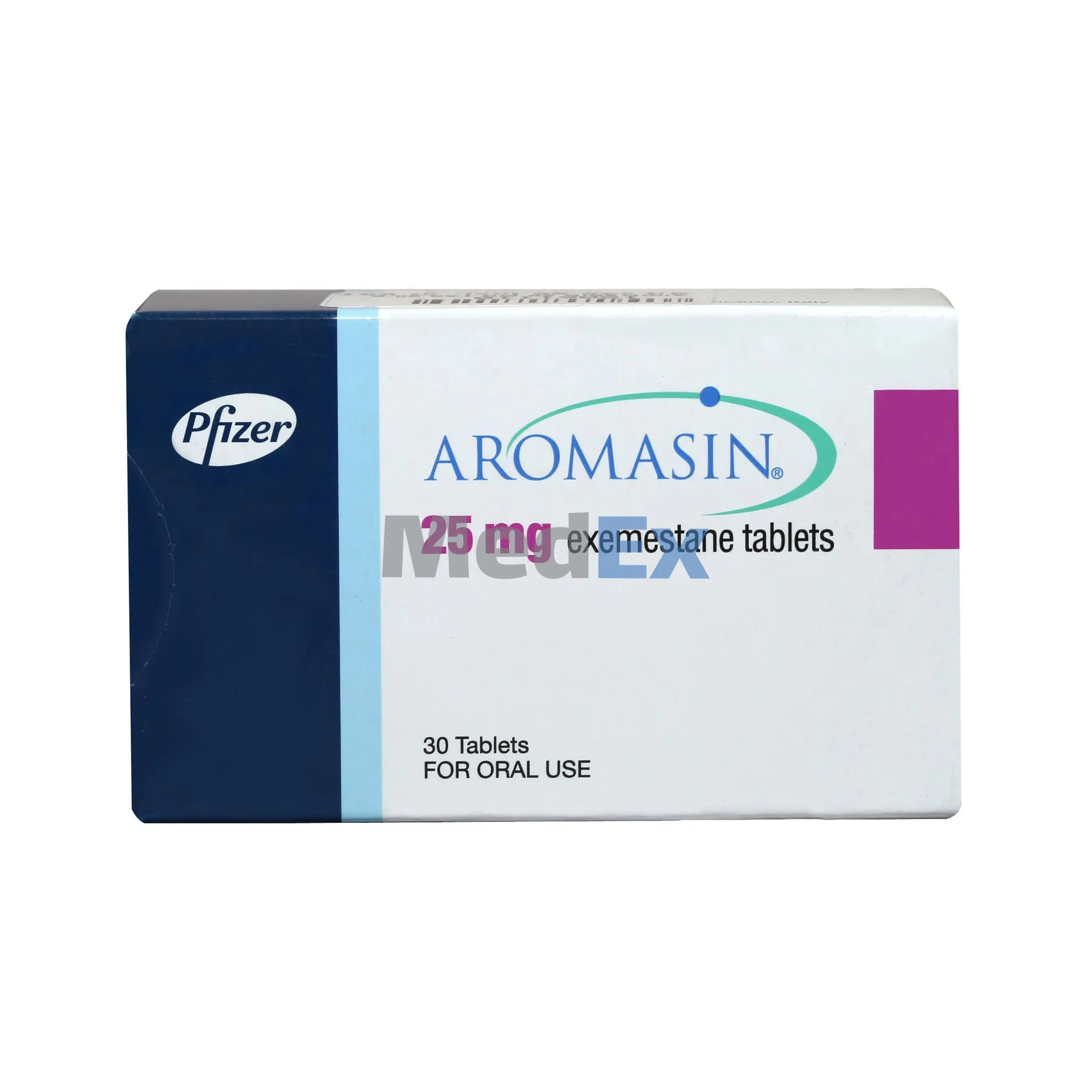
2 brands sorted by unit price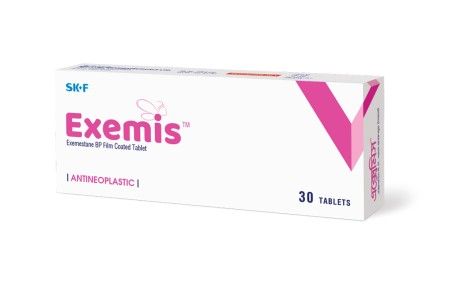
📖 Official Clinical Monograph
DGDA Approved Prescribing GuidelinesAdjuvant treatment of postmenopausal women with estrogen-receptor-positive early breast cancer who have received two to three years of Tamoxifen and are switched to Aromasin for completion of a total of five consecutive years of adjuvant hormonal therapy.
Treatment of advanced breast cancer in postmenopausal women whose disease has progressed following tamoxifen therapy.
The recommended dose of Exemestane in early and advanced breast cancer is one 25 mg tablet once daily after a meal.
Adjuvant treatment of postmenopausal women with estrogen-receptor positive early breast cancer who have received two to three years of tamoxifen and are switched to Exemestane for completion of a total of five consecutive years of adjuvant hormonal therapy.
The treatment of advanced breast cancer in postmenopausal women whose disease has progressed following tamoxifen therapy.
Dose Modifications: Concomitant use of strong CYP 3A4 inducers decreases exemestane exposure, For patients receiving Exemestane with a strong CYP 3A4 inducer such as rifampicin or phenytoin, the recommended dose of Exemestane is 50 mg once daily after a meal.
Exemestane is contraindicated in patients with a known hypersensitivity to the drug or to any of the excipients.
Hot flushes
Fatigue
Arthralgia
Headache
Insomnia
Increased Sweating
Reductions in bone mineral density (BMD) over time are seen with Aromasin use.
Routine assessment of 25-hydroxy vitamin D levels prior to the start of aromatase inhibitor treatment should be performed.
Embryo-Fetal Toxicity: Can cause fetal harm. Advise females of reproductive potential of the potential risk to a fetus and to use effective contraception.
Exemestane is an irreversible, steroidal aromatase inactivator, structurally related to the natural substrate androstenedione. It acts as a false substrate for the aromatase enzyme, and is processed to an intermediate that binds irreversibly to the active site of the enzyme, causing its inactivation, an effect also known as suicide inhibition. Exemestane significantly lowers circulating estrogen concentrations in postmenopausal women, but has no detectable effect on adrenal biosynthesis of corticosteroids or aldosterone. Exemestane has no effect on other enzymes involved in the steroidogenic pathway up to a concentration at least 600 times higher than that inhibiting the aromatase enzyme.