Erythromycin
💊 Brand Formulations & Prices
79 brands sorted by unit price
Mitrocin
Eryzen
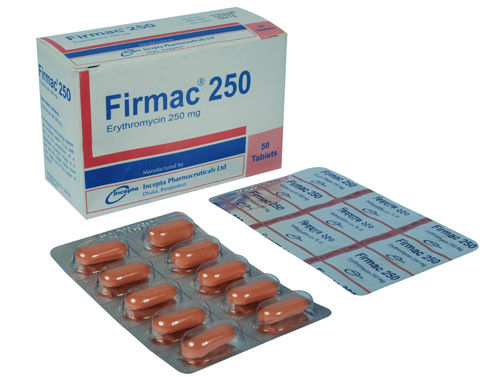
Firmac
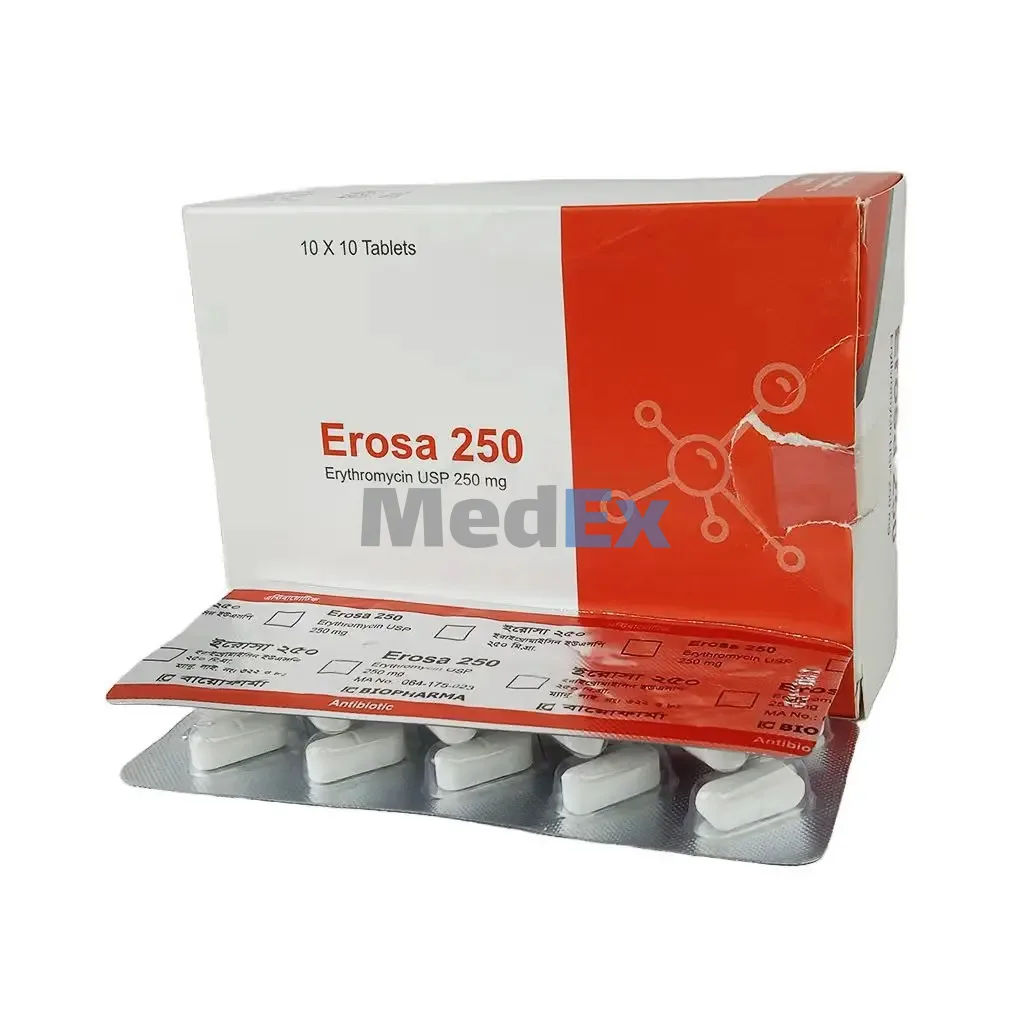
Erosa
Emycin
Erom
Macery
Ery
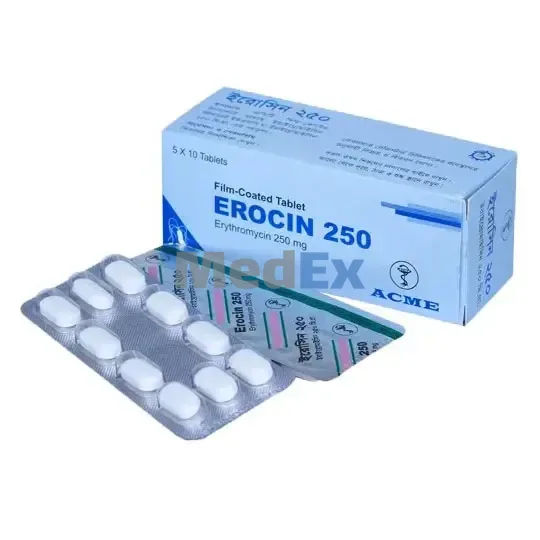
Erocin
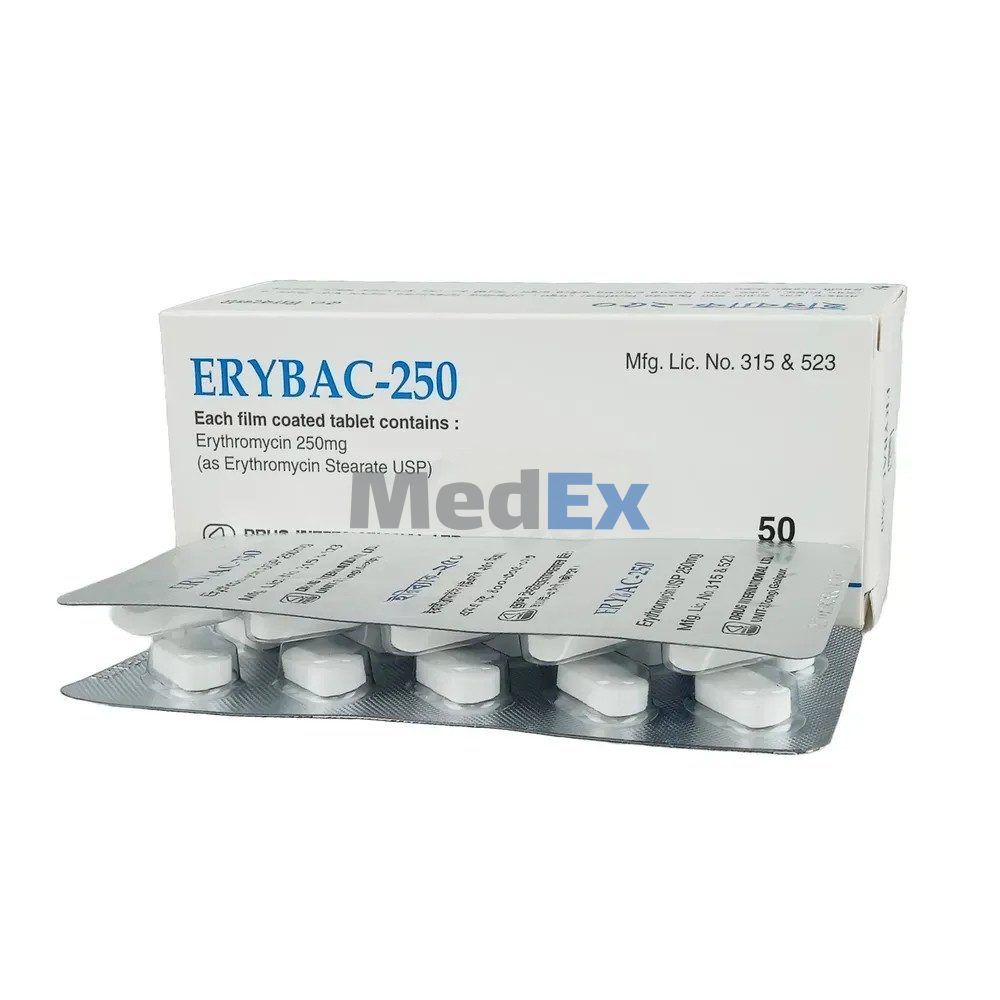
Erybac
E-Rox
Priocin
EM
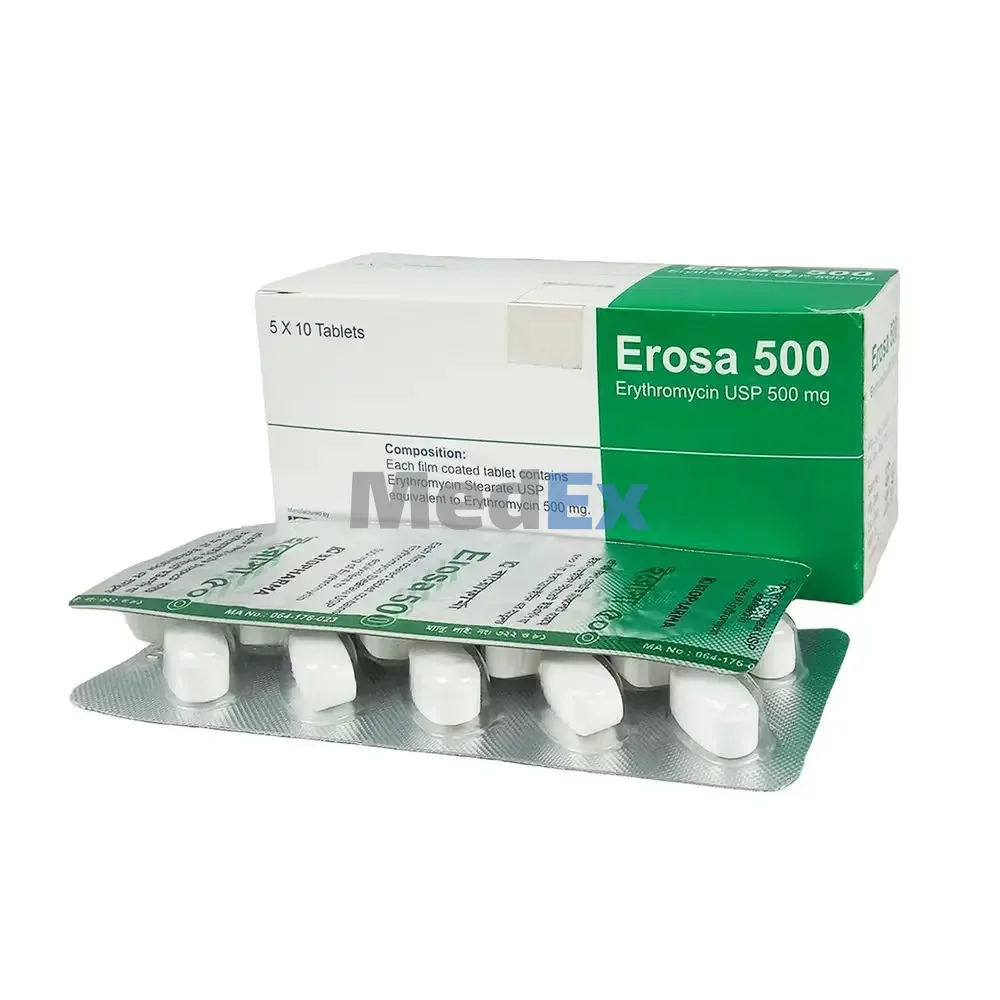
Erosa
Eryseem-500
Throcin
Mycin
Loxyl
Mitrocin
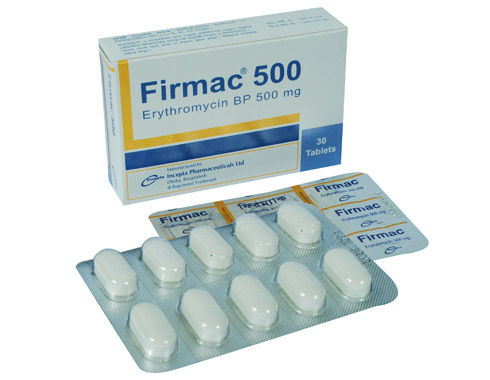
Firmac
Erom
Eryzen
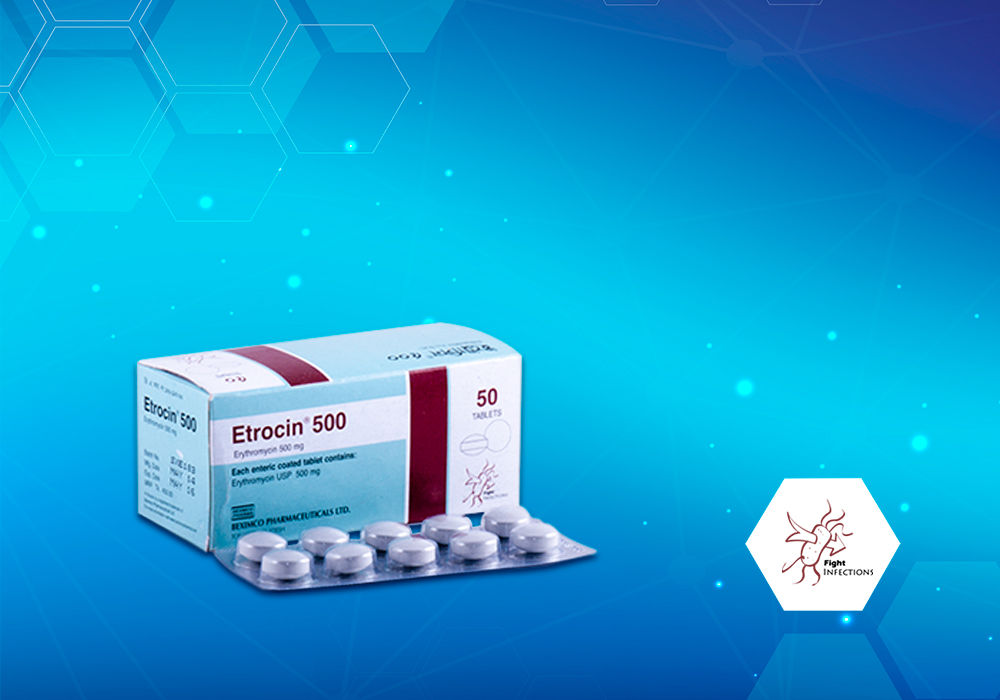
Etrocin
Macery
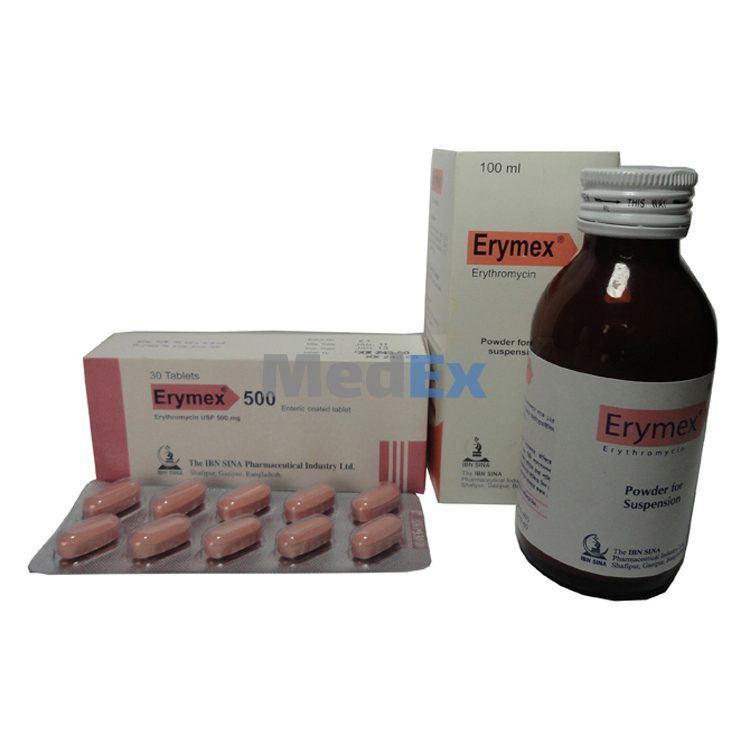
Erymex
Ery
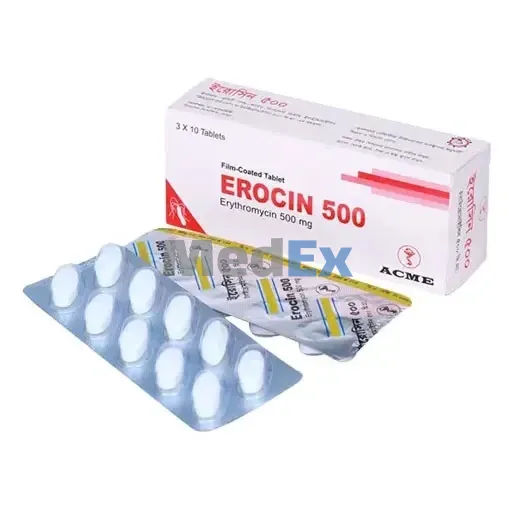
Erocin
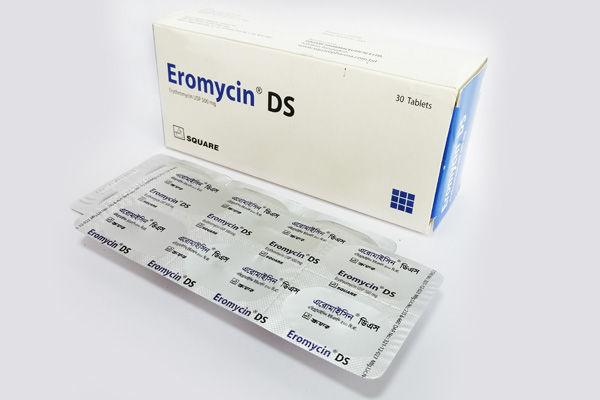
Eromycin DS
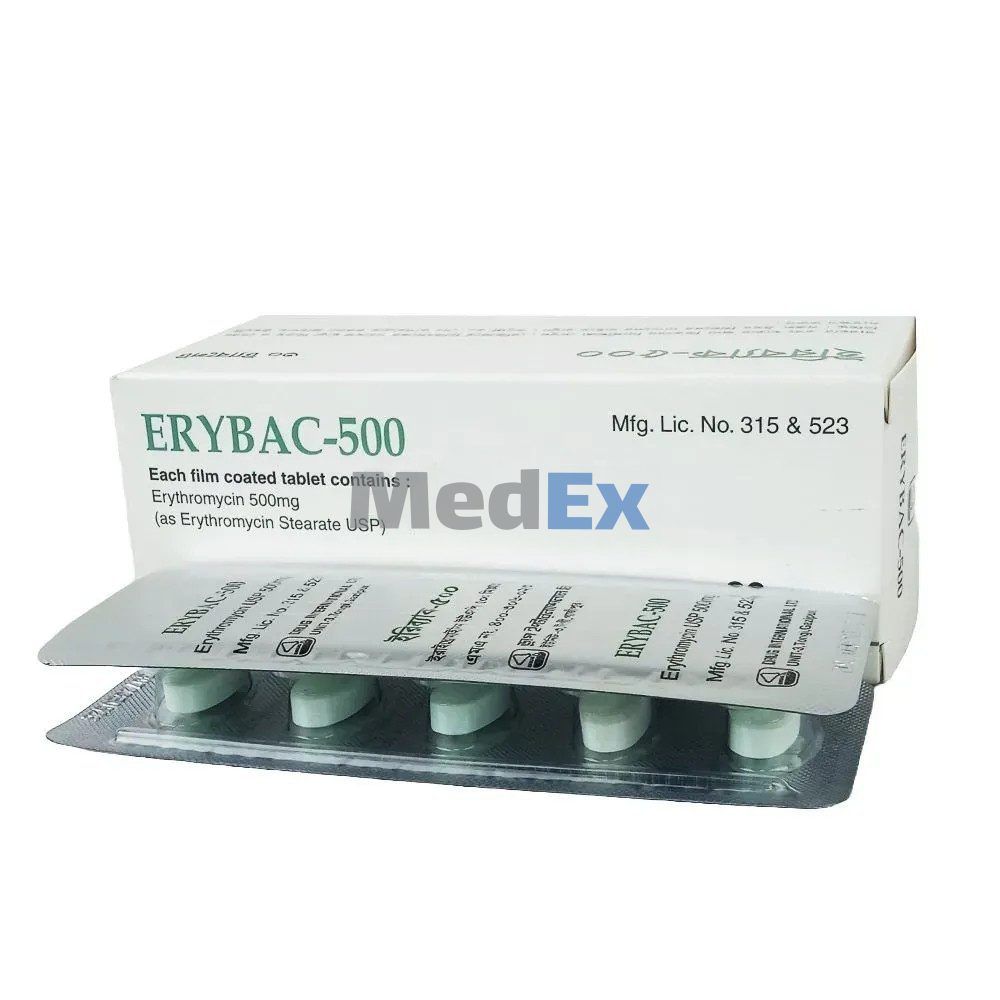
Erybac
E-Lid
Eromed
Eryth
Kumucin
Eryseem
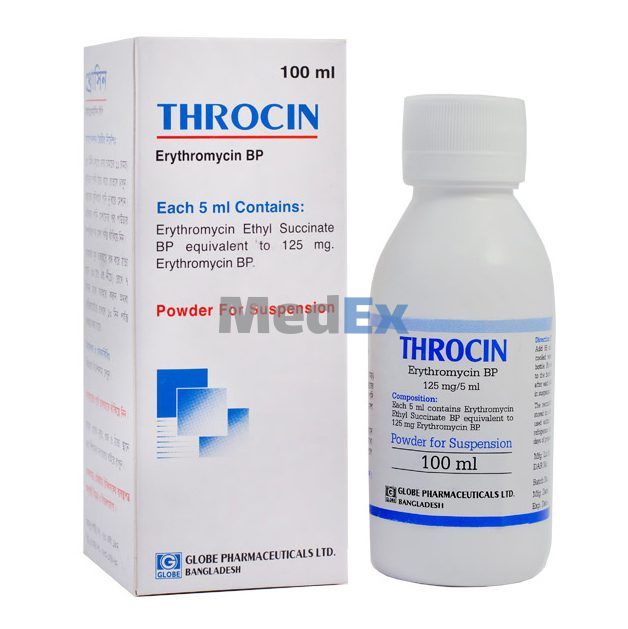
Throcin
Usucchin
Macas
Eryzen
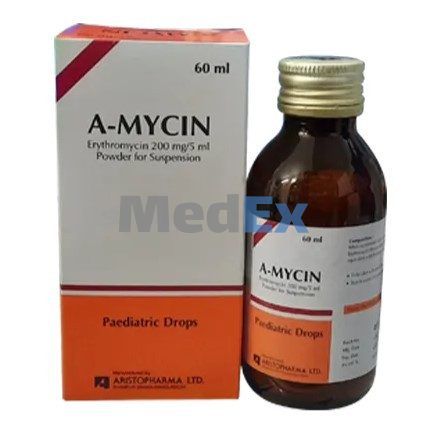
A-Mycin
Acryth
Arigram
EM
ERO
Edry
Erosil
Erynet
Firmac
Macin
Makcin
Mitrocin
Mycin
Emycin
Zuracin
Ethro
Priocin
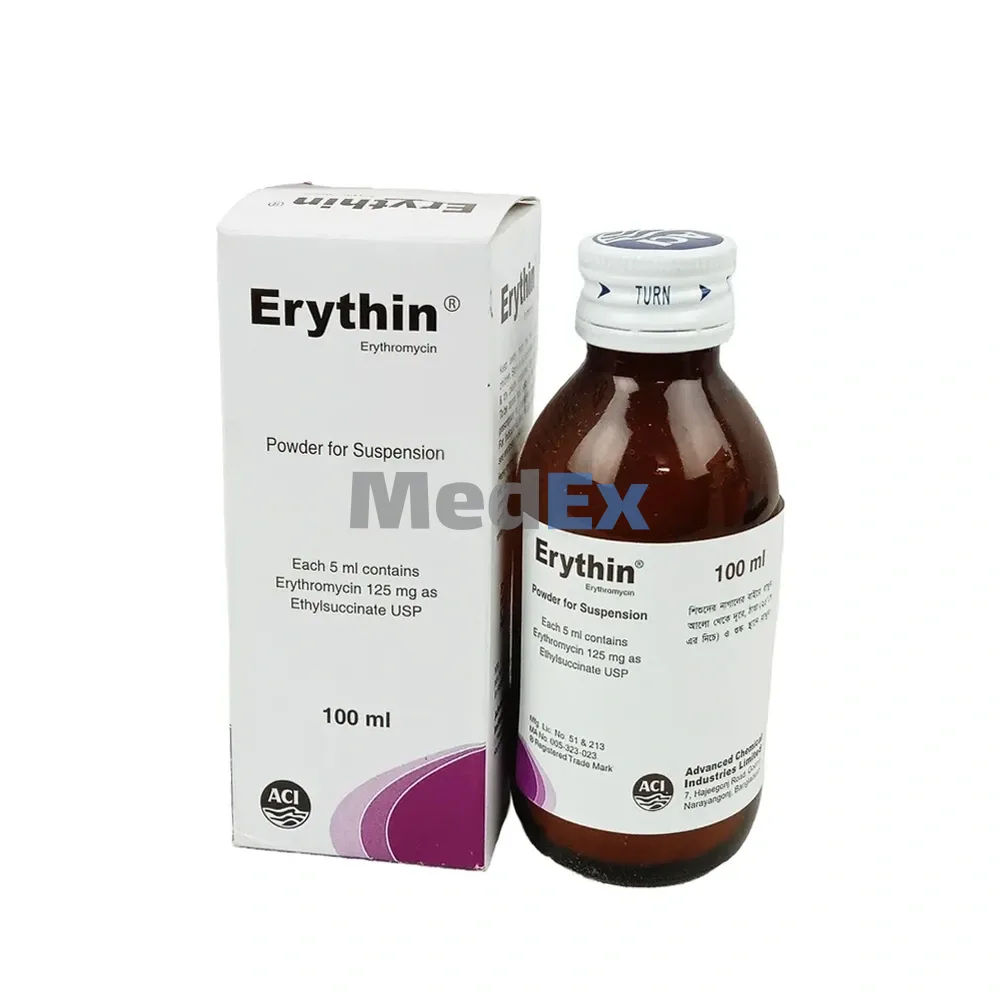
Erythin
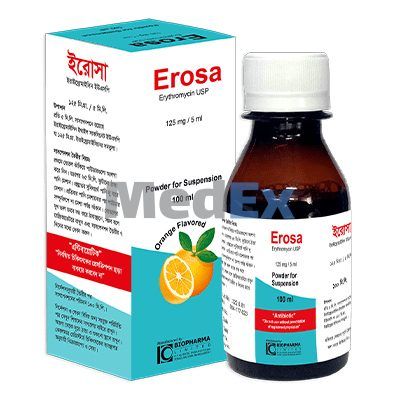
Erosa
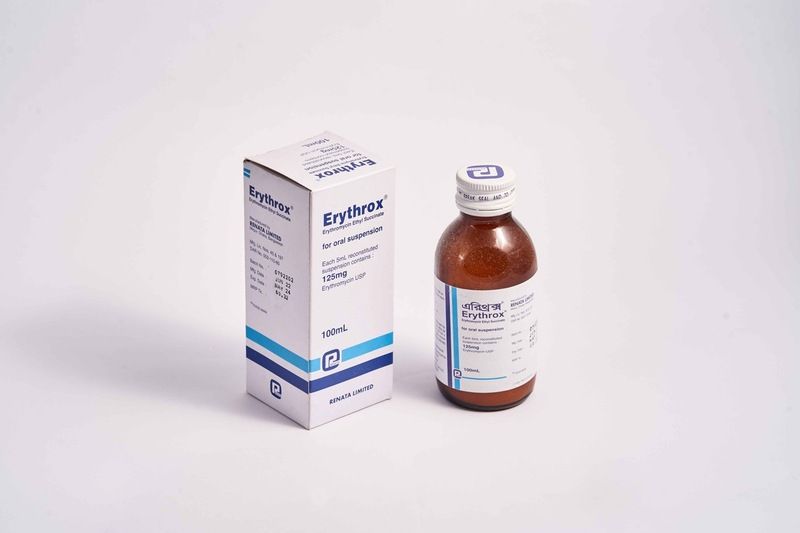
Erythrox
Erom
E-Rox
Erosite
Erode
Eromycin
Mythrocin
Ery
Macery
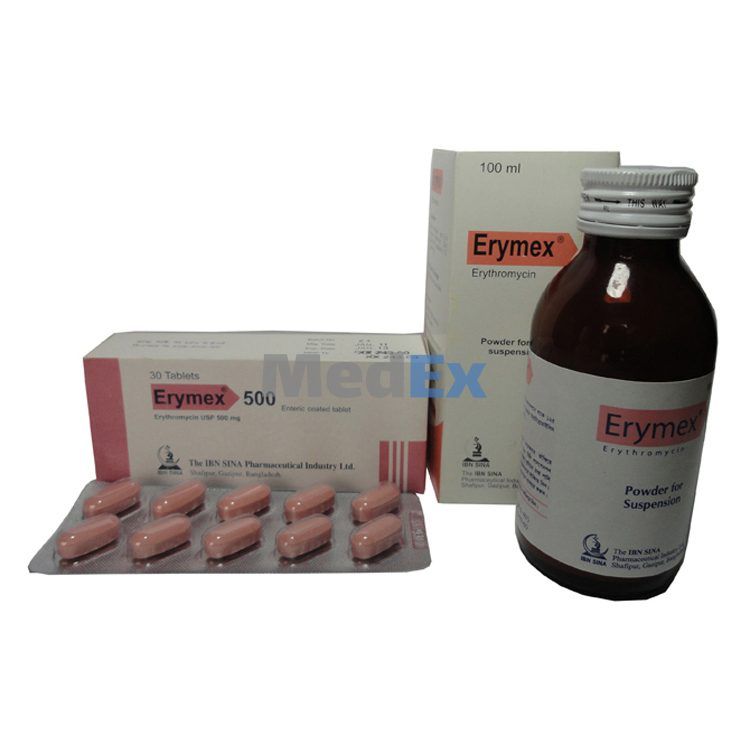
Erymex

Ermac
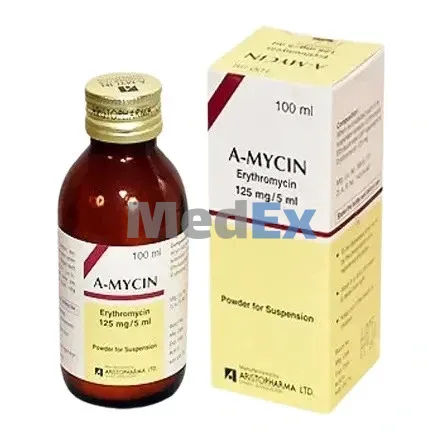
A-Mycin
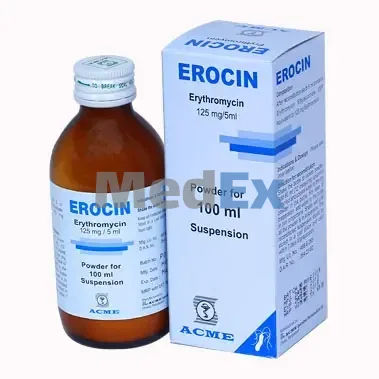
Erocin
Etrocin
Pedicin
Eromycin
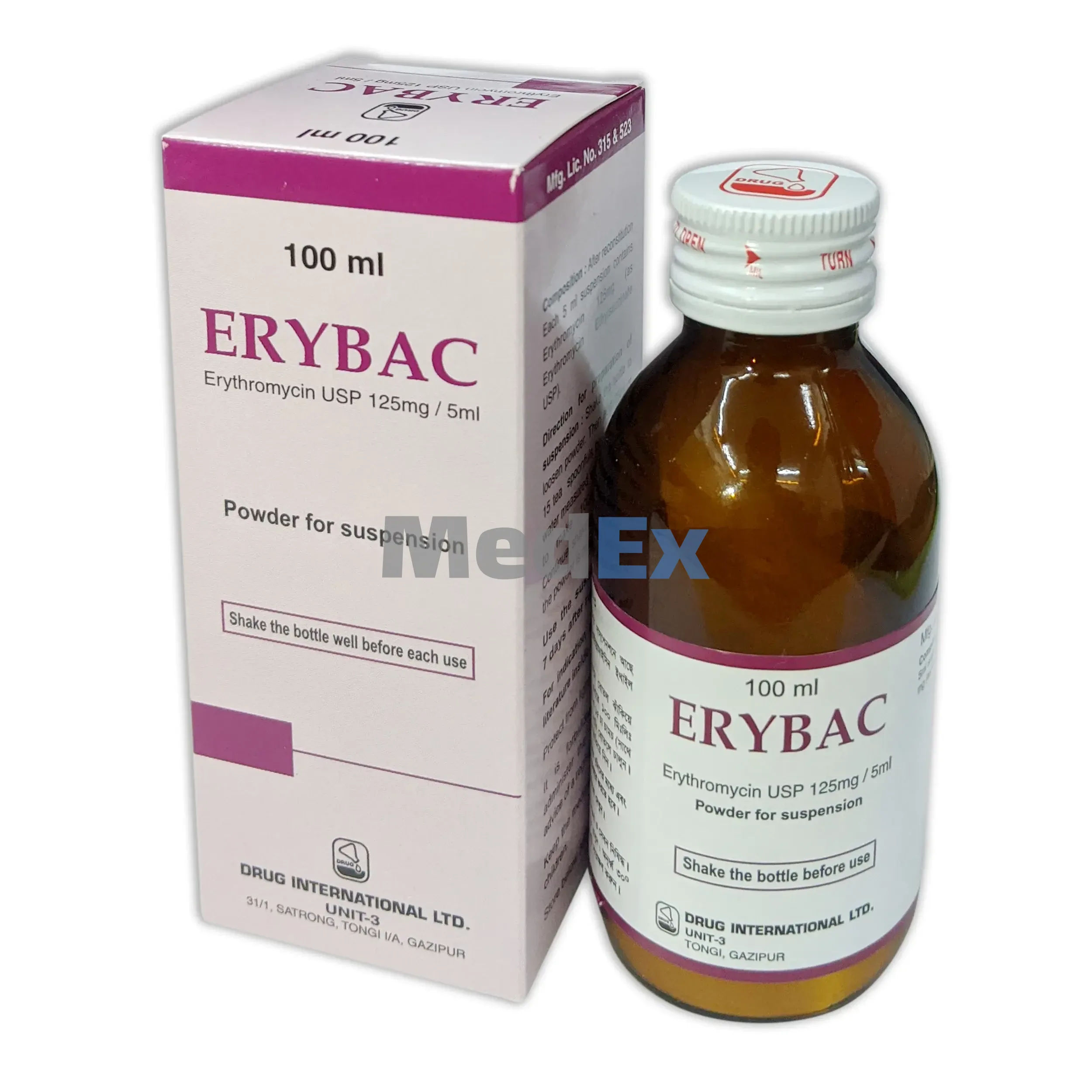
Erybac
Zerobac
Mitrocin DS
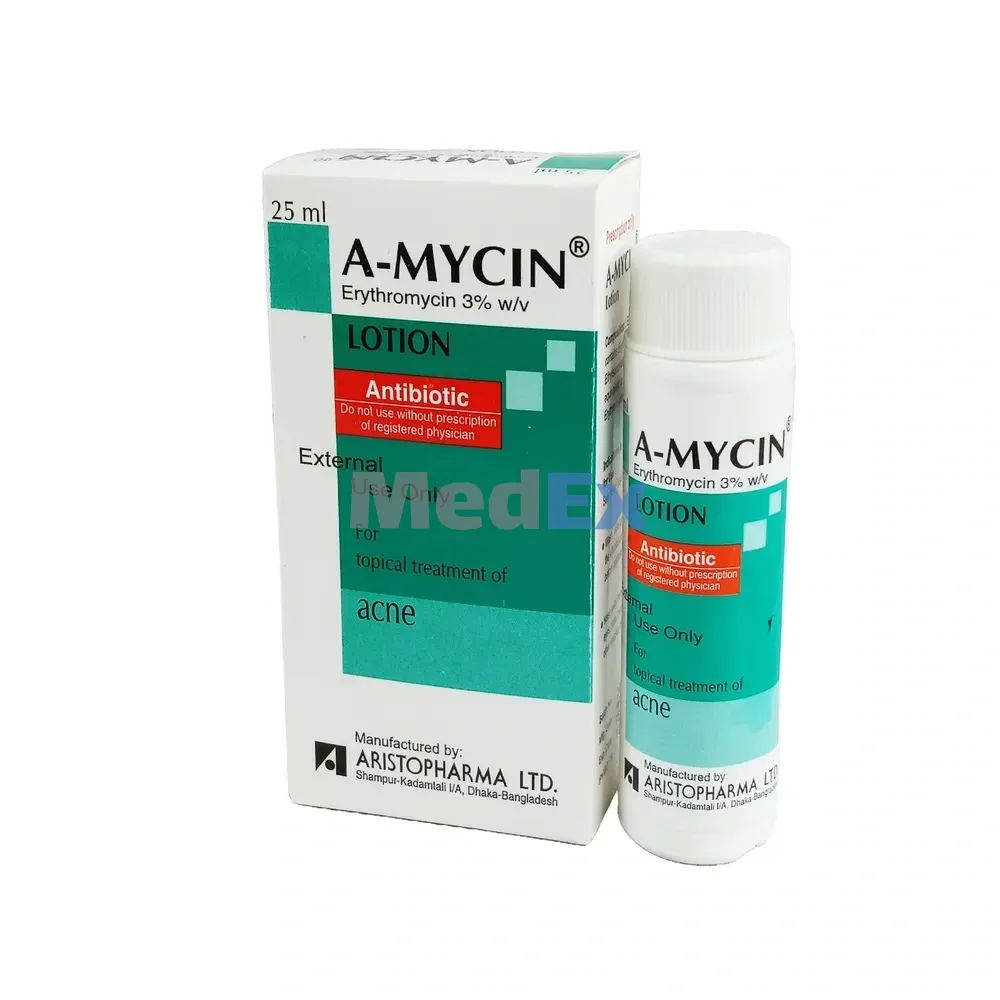
A-Mycin
Eromycin
Macrocin-T
📖 Official Clinical Monograph
DGDA Approved Prescribing GuidelinesA-Mycin is highly effective in the treatment of a wide variety of clinical infections.
Upper respiratory tract infections
: Tonsilitis, Peritonsillar abscess, Pharyngitis, laryngitis, Sinusitis. Secondary infections in colds and influenza.
Lower respiratory tract infections
... Read more
A-Mycin is highly effective in the treatment of a wide variety of clinical infections.
Upper respiratory tract infections
: Tonsilitis, Peritonsillar abscess, Pharyngitis, laryngitis, Sinusitis. Secondary infections in colds and influenza.
Lower respiratory tract infections
: Tracheitis, acute and chronic bronchitis.
Ear infections
: Otitis media, otitis externa, mastoiditis.
Eye infections
: Blepharitis, established trachoma.
Skin and Soft tissue infections
: Boils and carbuncles, impetigo, abscesses, pustular acne, paromychia, cellulitis, erysipelas.
Gastrointestinal tract infections
: Cholecystitis, staphylococcal enterocolitis.
Prophylaxis
: Pre and post-operative, trauma, burns, rheumatic fever.
Other infections
: Osteomyelitis, diptheria, scarlet fever, whooping cough.
Adult and Children over 8 years
: 250-500 mg every six hours for mild to moderate infections. This may be increased upto 4 gm. or more daily in severe cases.
Elderly
: No special dosage recommendation. Erythromycin may be administered if desired, three times daily or twice daily by giving one-third or half of the total daily requirement 8 hourly or 12 hourly respectively.
Children aged 2 to 8 years
: 250 mg. every six hours or 30-50 mg/kg body weight per day divided into four equal dosage.
Infants and Children upto 2 years
: 500 mg. in divided doses or 30-50 mg/kg body weight in divided doses.
Known hypersensitivity to Erythromycin.
Allergic reactions are rare and mild although anaphylaxis has occurred. Occasionally there is abdominal discomfort after oral administration, sometimes with nausea and vomiting. This discomfort usually subsides after a few days without it being necessary to reduce the dosage.
A-Mycin should be given with care in patients with impaired hepatic function, as A-Mycin is excreted principally in the bile.
Erythromycin inhibits microsomal protein synthesis in susceptible organisms by inhibiting the translocation process. Specific binding to the 50S subunit or 70S ribosome occurs in these organisms but there is no binding to the stable 80S mammalian ribosome. Erythromycin is active against many Grampositive bacteria, some Gram-negative bacteria and against mycoplasmas and chlamydia.
Absorption
: Erythromycin base is destroyed by acid and is therefore administered in the form of stable ester. The rates of absorption of the base and esters are diminished by the presence of food. The stearate is hydrolyzed in the intestine and the free erythromycin absorbed.
Blood concentration
: After an oral dose of 500 mg. of the base of stearate, peak serum concentrations of 0.9 to 1.4 or 0.4 to 1.8 mg/ml. respectively are attained in 1 to 4 hours. Half-life: The serum half-life is 1.2 to 4 hours. In subjects with oliguria, the half-life is about 5 hours.
Distribution
: Erythromycin is widely distributed throughout body tissue and fluids with some retention in the liver and spleen, protein binding of erythromycin base is 73%. Erythromycin enters the cerebrospinal fluid when the meninges are inflamed. It also crosses the placenta and is excreted in the milk.
Excretion
: 5 to 15 % of the dose of erythromycin is excreted in the urine and large amounts of the unchanged active substance are excreted in the bile.