Crisaborole
💊 Brand Formulations & Prices
2 brands sorted by unit price
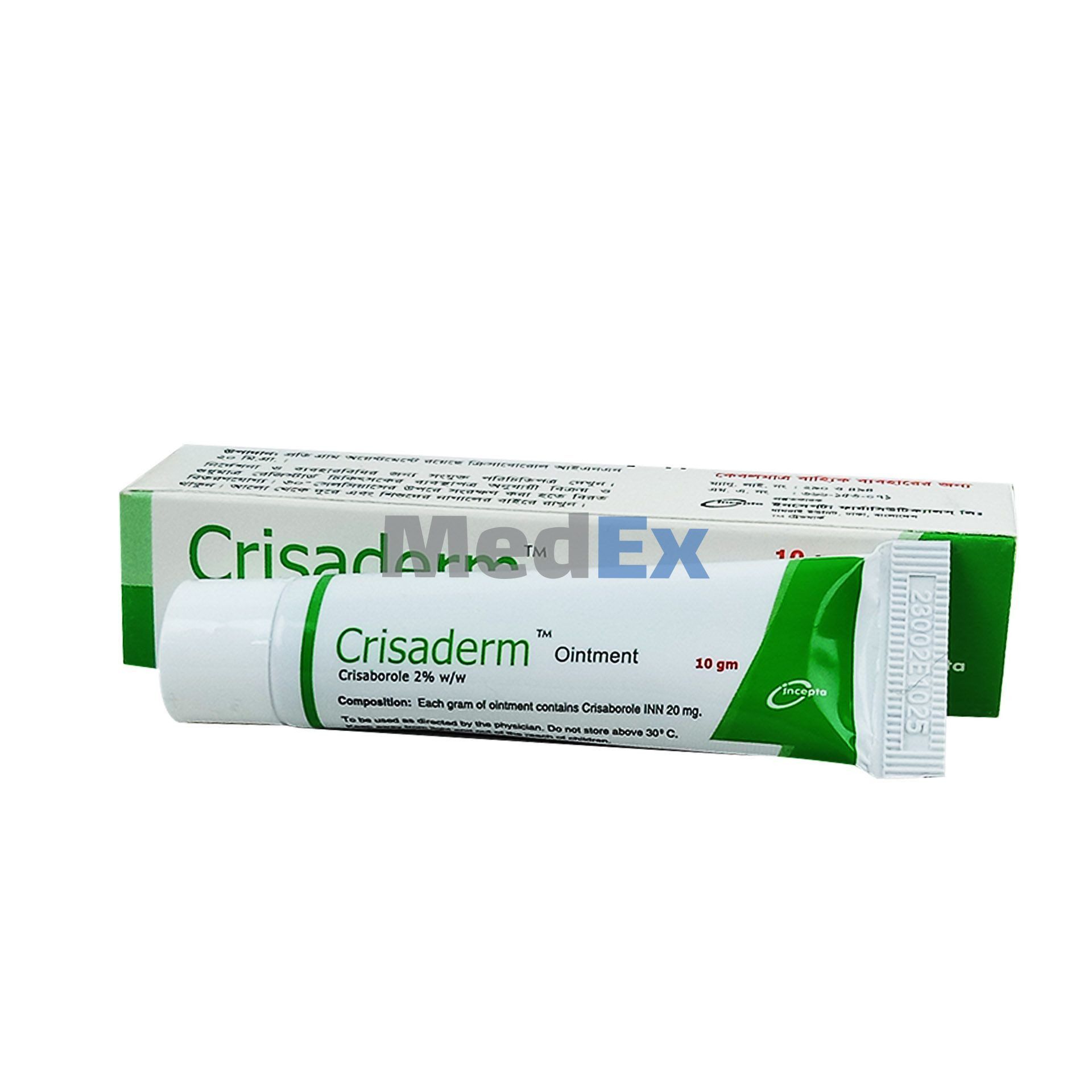
📖 Official Clinical Monograph
DGDA Approved Prescribing GuidelinesCrisa is indicated for topical treatment of mild to moderate atopic dermatitis in pediatric patients 3 months of age and older.
Apply a thin layer of Crisaborole twice daily to affected areas. Crisaborole is for topical use only and not for ophthalmic, oral, or intravaginal use.
Allergic reactions- Crisa may cause allergic reactions at or near the application site. These can be serious and may include hives, itching, swelling, and redness. The most common side effect of Crisa is application site pain, such as burning or stinging.
Hypersensitivity reactions, including contact urticaria have occurred in patients treated with Crisa. If signs and symptoms of hypersensitivity occur, discontinue Crisa immediately and initiate appropriate therapy.
The active ingredient, Crisaborole, is a phosphodiesterase-4 (PDE-4) inhibitor, mainly acting on phosphodiesterase 4B (PDE4B), which causes inflammation. Chemically, Crisaborole is a phenoxybenzoxaborole. It contains a boron atom that helps penetrate the skin and is essential for its binding activity. Inhibition of PDE4B appears to suppress the release of tumor necrosis factor alpha (TNFα), interleukin-12 (IL-12), IL-23 and other cytokines, proteins believed to be involved in the immune response and inflammation.