 Oshud
OshudClonazepam
 Adjunct anti-epileptic drugs, Benzodiazepine hypnotics
Brands & Prices (153)
📋 Indications & Uses Dosage & Administration⚠️ Contraindications⚡ Side Effects & Adverse Reactions🛡️ Warnings & Precautions🔬 Pharmacology & Mechanism
Adjunct anti-epileptic drugs, Benzodiazepine hypnotics
Brands & Prices (153)
📋 Indications & Uses Dosage & Administration⚠️ Contraindications⚡ Side Effects & Adverse Reactions🛡️ Warnings & Precautions🔬 Pharmacology & Mechanism
Brand Formulations & Prices
153 brands sorted by unit price
Esypan
Cozinil
Rivo

Clonatril
Denixil
Denixil Rapid
Depanil

Disopan ODT

Leptic ODT

Pase OFT
Rivotril
Esypan

Clonapin
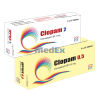
Clopam
Epizam
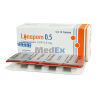
Lonapam

Myotril
Restonix
Reverse
Kuit
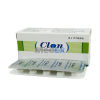
Clon
Clonafix
Clonazepam
Clonepam
Clonzy
Closid
Clozep
Cozinil
Disogen
Genopam
Lonapam

Miraclon
Novotril
Slona
Sypam

Xetril
Xioclon

Xyclon
Clepam

Cloma
Clonabest
Clonapex
Denixil

Pase
Conpan
Dipan
Comfy
Conpan ODT

Leptic
Arotril
Clon
Clonapin
Clonatril
Clonil
Clonium ODT

Cloron
Denixil Rapid
Depanil
Eram
Leptic ODT
Lonapam
Lonazep
Lonazep MD
Pandura
Pase OFT
Xioclon
Clonaben
Clepam

Cloma
Clonaben
Clonapex
Clonapin
Clopam

Cloron
Closid
Disogen
Disopan
Epiclon
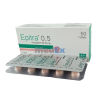
Epitra
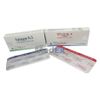
Epizam

Epnil
Kuit
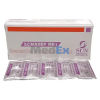
Lonazep MD
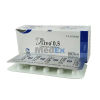
Rivo
Xetril
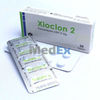
Xioclon
Xyclon
Dipan
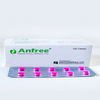
Arotril
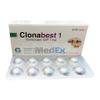
Clonabest
Clonatril
Clonium
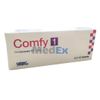
Comfy
Conpan

Denixil
Disopan
Epiclon
Epitra
Eram
Leptic
Lonazep
Miraclon
Novotril
Pandura
Pase
Rivo
Rivotril
Xorest
Xorest

Epnil
Clepam

Cloma
Clonafix
Clonil
Clonzy
Closid
Clozep
Genopam
Lonazep MD
Restonix
Reverse
Slona
Sypam
Xetril
Xyclon
Clonaben

Clonatril
Clonium

Cloron
Rivotril
Dipan
Conpan

Leptic

Pase
Rivo
Clonabest

Comfy
Miraclon
Pandura
kuit
Disopan
Epitra
Arotril
Denixil
Epiclon

Epnil
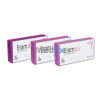
Eram
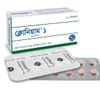
Clonium
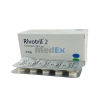
Rivotril
Pase
Cloron
Disopan
Pase
📖 Official Clinical Monograph
DGDA Approved Prescribing GuidelinesArotril is indicated for the treatment of panic disorder, with or without agoraphobia. Panic disorder is characterized by the occurrence of unexpected panic attacks and associated concern about having additional attacks, worry about the implications or consequences of the attacks.
Arotril
... Read more
Arotril is indicated for the treatment of panic disorder, with or without agoraphobia. Panic disorder is characterized by the occurrence of unexpected panic attacks and associated concern about having additional attacks, worry about the implications or consequences of the attacks.
Arotril is also indicated alone or as an adjunct in the treatment of the Lennox-Gastaut Syndrome (petit mal variant), akinetic and myoclonic seizures. It may be indicated in patients with absence seizures (petit mal) who have failed to respond to succinimides.
The effectiveness of Arotril in long-term use, that is, for more than 9 weeks, has not been systematically studied in controlled clinical trials. The physician who elects to use Arotril for extended periods should periodically reevaluate the long-term usefulness of the drug for the individual patient.
Dosage & AdministrationOral:
Adults
: The initial dose for adults with seizure disorders should not exceed 1.5 mg/day divided into three doses. Dosage may be increased in increments of 0.5 to 1 mg every 3 days until seizures are adequately controlled or until side effects preclude any further increase. Maintenance dosage must be individualized for each patient depending upon response. Maximum recommended daily dose is 20 mg.
The initial dose for adults with panic disorder is 0.25 mg given in two divided dose. An increase to the target dose for most patients of 1 mg/day may be made after 3 days.
Pediatric Patients
: In order to minimize drowsiness, the initial dose for infants and children (up to 10 years of age or 30 kg of body weight) should be between 0.01 and 0.03 mg/kg/day but not to exceed 0.05 mg/kg/day given in two or three divided doses.
Injection:
Infants and children
: half of a vial (0.5 mg) by slow IV injection or by IV infusion.
Adults
: 1 vial (1 mg) by slow IV injection or by IV infusion. This dose can be repeated as required (1-4 mg are usually sufficient to reverse the status). In adults, the rate of injection must not exceed 0.25 - 0.5 mg per minute (0.5-1.0 ml of the prepared solution) and a total dose of 10 mg should not be exceeded.
It should not be used in patients with a history of hypersensitivity to benzodiazepines, nor in patients with clinical or biochemical evidence of significant liver disease. It may be used in patients with open angle glaucoma who are receiving appropriate therapy but is contraindicated in acute narrow angle glaucoma.
The most frequently occurring side effects of Arotril are referable to CNS depression. Experience in treatment of seizures has shown that drowsiness has occurred in approximately 50% of patients and ataxia in approximately 30%. In some cases, these may diminish with time; behavior problems have been noted in approximately 25% of patients. Abnormal eye movements, aphonia, coma, tremor, vertigo, confusion, depression, amnesia, hallucinations, hysteria, increased libido, insomnia, psychosis & palpitations may also occur.
When used in patients in whom several different types of seizure disorders coexist, Arotril may increase the incidence or precipitate the onset of generalized tonic-clonic seizures. This may require the addition of appropriate anticonvulsants or an increase in their dosages. The concomitant use of valproic acid and Arotril may produce absence status.
Clonazepam exhibits pharmacological properties which are common to benzodiazepines and include anticonvulsive, sedative, muscle relaxing and anxiolytic effects. The central actions of benzodiazepines are mediated through an enhancement of the GABAergic neurotransmission at inhibitory synapses. In the presence of benzodiazepines the affinity of the GABA receptor for the neurotransmitter is enhanced through positive allosteric modulation resulting in an increased action of released GABA on the postsynaptic transmembrane chloride ion flux.
There are also animal data showing an effect of clonazepam on serotonin. Animal data and electroencephalographic investigations in man have shown that clonazepam rapidly suppresses many types of paroxysmal activity including the spike and wave discharge in absences seizures (petit mal), slow spike wave, generalized spike wave, spikes with temporal or other locations as well as irregular spikes and waves. Generalized EEG abnormalities are more regularly suppressed than focal abnormalities. According to these findings clonazepam has beneficial effects in generalized and focal epilepsies.