 Oshud
OshudCapmatinib Hydrochloride
 Cytotoxic Chemotherapy
Brands & Prices (1)
📋 Indications & Uses Dosage & Administration⚡ Side Effects & Adverse Reactions🛡️ Warnings & Precautions🔬 Pharmacology & Mechanism
Cytotoxic Chemotherapy
Brands & Prices (1)
📋 Indications & Uses Dosage & Administration⚡ Side Effects & Adverse Reactions🛡️ Warnings & Precautions🔬 Pharmacology & Mechanism
Brand Formulations & Prices
1 brands sorted by unit price
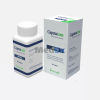
📖 Official Clinical Monograph
DGDA Approved Prescribing GuidelinesCapmaxen is indicated for the treatment of adult patients with metastatic non-small cell lung cancer (NSCLC) whose tumors have a mutation that leads to mesenchymal-epithelial transition (MET) exon 14 skipping as detected by an FDA approved test.
Dosage & AdministrationPatient Selection: Select patients for treatment with Capmatinib based on the presence of a mutation that leads to MET exon 14 skipping in tumor or plasma specimens. If a mutation that leads to MET exon 14 skipping is not detected in a plasma specimen, test tumor tissue if feasible.
Recommended Dose: The recommended dosage of Capmatinib is 400 mg orally twice daily with or without food. Swallow Capmatinib tablets whole. Do not break, crush or chew the tablets. If a patient misses or vomits a dose, instruct the patient not to make up the dose, but to take the next dose at its scheduled time.
Lung or breathing problems
Liver problems.
Pancreas problems.
Swelling of your hands or feet
Nausea
Muscle or bone pain
Tiredness and weakness
Vomiting
Trouble breathing
Cough
Loss of appetite
Changes in certain blood tests
Interstitial Lung Disease (ILD)
: Immediately withhold Capmaxen in patients with suspected ILD/pneumonitis and permanently discontinue if no other potential causes of ILD/pneumonitis are identified.
Hepatotoxicity
: Monitor liver function tests (including ALT, AST, and total bilirubin) prior to the start of Capmaxen, every 2 weeks during the first 3 months of treatment, then once a month or as clinically indicated, with more frequent testing in patients who develop increased transaminases or bilirubin. Based on the severity of the adverse reaction, withhold, dose reduce, or permanently discontinue Capmaxen.
Pancreatic Toxicity
: Monitor amylase and lipase at baseline and regularly during treatment with Capmaxen. Based on the severity of the adverse drug reaction, temporarily withhold, dose reduce, or permanently discontinue Capmaxen.
Risk of Photosensitivity
: Advise patients to limit direct ultraviolet exposure during treatment with Capmaxen.
Embryo-Fetal Toxicity
: Based on findings from animal studies and its mechanism of action, Capmaxen can cause fetal harm when administered to a pregnant woman.
Capmatinib is a kinase inhibitor that targets MET, including the mutant variant produced by exon 14 skipping. MET exon 14 skipping results in a protein with a missing regulatory domain that reduces its negative regulation leading to increased downstream MET signaling. Capmatinib inhibited cancer cell growth driven by a mutant MET variant lacking exon 14 at clinically achievable concentrations and demonstrated anti-tumor activity in murine tumor xenograft models derived from human lung tumors with either a mutation leading to MET exon 14 skipping or MET amplification. Capmatinib inhibited the phosphorylation of MET triggered by binding of hepatocyte growth factor or by MET amplification, as well as MET mediated phosphorylation of downstream signaling proteins and proliferation and survival of MET-dependent cancer cells.