 Oshud
OshudCalcium Carbonate
 Minerals in bone formation, Specific mineral preparations
Brands & Prices (87)
📋 Indications & Uses Dosage & Administration⚠️ Contraindications⚡ Side Effects & Adverse Reactions🔬 Pharmacology & Mechanism
Minerals in bone formation, Specific mineral preparations
Brands & Prices (87)
📋 Indications & Uses Dosage & Administration⚠️ Contraindications⚡ Side Effects & Adverse Reactions🔬 Pharmacology & Mechanism
Brand Formulations & Prices
87 brands sorted by unit price
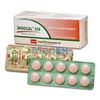
Jasocal

Kidcal
Cenet
Ostocurb
Calfor
Bpcal
Cal-aid
Calci-D
Calciton
Calcizen DS
Calfeed
Calmax
Calsto
Cinet
Cpcal
Edical
Indocal
Med Cal
Oracal
Procala
Ambeecal
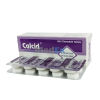
Calcid
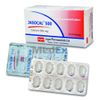
Jasocal
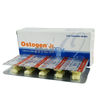
Ostogen Jr

Protebon
Carbocal
Bonacal
Cabonate
Calcicar

Caldical
Calium
Neocal
Ostoplus
Sycal
Unate
Ostim
Precal
Mystocal
Cal
Calmet
Forbon
Myocal
Ossi
Ostimet
Rejuven
Sancal
Silcal
Suplical

Acical Jr.
Mycal
Caletal
Maxcal
See-Cal

Ostogen

Ipical

Oscal
Ostocal JR
Maxical

Aristocal
Calbo Jr
Calcium DS
Calos
Calsil
Caltonic
Carben
Costin
Ostacid
Paracal
Rocal Jr
Sucal
Acical
Calmi
Casalt
Monocal
Caldil
Eurocal

Orthocal

A-Cal
Cal
Calbo

Calcin
Calcium-A
Isocal
Ostocal
Rocal
Starcal

Sandocal
📖 Official Clinical Monograph
DGDA Approved Prescribing Guidelines250 mg or 500 mg tablet
: Elemental A-Cal tablet is used for the treatment or prevention of calcium depletion in patients in whom dietary measures are inadequate. Conditions that may be associated with calcium deficiency include hypoparathyroidism, achlorhydria, chronic diarrhea, vitamin
... Read more
250 mg or 500 mg tablet
: Elemental A-Cal tablet is used for the treatment or prevention of calcium depletion in patients in whom dietary measures are inadequate. Conditions that may be associated with calcium deficiency include hypoparathyroidism, achlorhydria, chronic diarrhea, vitamin D deficiency, steatorrhea, sprue, pregnancy and lactation, menopause, pancreatitis, renal failure, alkalosis, and hyperphosphataemia. A-Cal is being used increasingly often to treat hyperphosphataemia in chronic renal failure as well as those on continuous ambulatory peritoneal dialysis (CAPD) and haemodialysis. Many patients are unable to tolerate sufficient doses for complete phosphate control and require additional measures such as stringent dietary phosphate restriction or relatively small doses of aluminium hydroxide. A-Cal containing preparations can provide short-term relief of dyspeptic systems but are no longer recommended for long-term treatment of peptic ulceration.
1000 mg tablet
: Elemental A-Cal tablet is indicated for the management of conditions associated with hyperidity and for fast relief of acid indigestion, heartburn, sour stomach and upset stomach.
Dosage & Administration250 mg or 500 mg tablet
: Calcium Carbonate is always used orally and when used as an antacid the recommended doses for adults are equivalent to 540-2000 mg Calcium Carbonate per day, doses for children being half of those for adults. As a dietary supplement, such as for the prevention of osteoporosis, 1250-3750 mg Calcium Carbonate (500-1500 mg calcium) daily is recommended in general, but again this will need to be tailored to the individual patient depending on any specific disease such as Calcium deficiency, malabsorption or parathyroid function. In pregnancy and lactation the recommended daily dose of calcium is 1200-1500 mg. In chronic renal failure the doses used vary from 2.5-9.0 gm Calcium Carbonate per day and need to be adjusted according to the individual patient. To maximize effective phosphate binding in this context the Calcium Carbonate should be given with meals.
1000 mg tablet
: 2000-3000 mg tablet when symptoms occur; may be repeated hourly if needed or as directed by the physician.
Hypercalcaemia and hyperparathyroidism
Hypercalciuria and nephrolithiasis
Zollinger-Ellison syndrome
Concomitant digoxin therapy (requires careful monitoring of serum calcium level)
When hypercalcaemia occurs, discontinuation of the drug is usually sufficient to return serum calcium concentrations to normal. Calcium salts should be used cautiously in patients with sarcoidosis, renal or cardiac disease, and in patients receiving cardiac glycosides.
Orally administered A-Cal may be irritating to the GI tract. It may also cause constipation. Hypercalcaemia is rarely produced by administration of calcium alone, but may occur when large doses are given to patients with chronic renal failure.
Calcium carbonate reacts with gastric acid to produce a salt and water. For calcium carbonate the postulated chemical reaction is: CaCO
3
+2HCl = CaCl
2
+H
2
O+CO
2
. Two grams of calcium carbonate will readily bring 100 ml of hydrochloric acid to a pH above 6. The increase in gastric pH diminishes the activity of pepsin in the gastric secretion. Up to 30% of the oral calcium load may be absorbed.