 Oshud
OshudCalcipotriol Monohydrate
 Topical Vitamin D & related preparations
Brands & Prices (4)
📋 Indications & Uses Dosage & Administration⚠️ Contraindications⚡ Side Effects & Adverse Reactions🛡️ Warnings & Precautions🔬 Pharmacology & Mechanism
Topical Vitamin D & related preparations
Brands & Prices (4)
📋 Indications & Uses Dosage & Administration⚠️ Contraindications⚡ Side Effects & Adverse Reactions🛡️ Warnings & Precautions🔬 Pharmacology & Mechanism
Brand Formulations & Prices
4 brands sorted by unit price
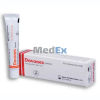
Dovonex
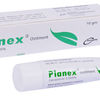
Planex

Dyvon

Daivonex
📖 Official Clinical Monograph
DGDA Approved Prescribing GuidelinesDaivonex topical preparation is indicated for the topical treatment of chronic stable plaque type psoriasis vulgaris in adult patients.
Dosage & AdministrationCalcipotriol cream & ointment should be applied topically to the affected area twice daily (i.e. in the morning and in the evening). Less frequent application may be indicated after the initial period of treatment. After satisfactory improvement has occurred, treatment should be discontinued. If recurrence takes place after discontinuation, the treatment may be reinstituted. Experience is lacking in the use of calcipotriol for periods longer than 1 year. The maximum recommended weekly dose of calcipotriol cream is 100 gm/week.
Calcipotriol cream & ointment is contraindicated in those patients with a history of hypersensitivity to any of the components of the preparations. It is also contraindicated in patients with known disorders of calcium metabolism.
Photosensitivity reactions, skin discolouration, bullous eruption, skin exfoliation, contact dermatitis and allergic reactions have been reported with topical calcipotriol therapy.
Daivonex cream & ointment is not recommended for use in patients with generalized pustular psoriasis, guttate psoriasis and erythrodermic exfoliate psoriasis. Daivonex cream & ointment is not recommended for use on the face.
Calcipotriol is a non-steroidal antipsoriatic agent, derived from vitamin D. Calcipotriol exhibits a vitamin D-like effect by competing for the 1,25(OH)2D3 receptor. Calcipotriol is as potent as 1,25(OH)2D3, the naturally occurring active form of vitamin D, in regulating cell proliferation and cell differentiation, but much less active than 1,25(OH)2D3 in its effect on calcium metabolism. Calcipotriol induces differentiation and suppresses proliferation (without any evidence of a cytotoxic effect) of keratinocytes, thus reversing the abnormal keratinocyte changes in psoriasis. The therapeutic goal envisaged with calcipotriol is thus a normalization of epidermal growth.