 Oshud
OshudBrolucizumab
 Brands & Prices (1)
📋 Indications & Uses Dosage & Administration⚠️ Contraindications⚡ Side Effects & Adverse Reactions🛡️ Warnings & Precautions🔬 Pharmacology & Mechanism
Brands & Prices (1)
📋 Indications & Uses Dosage & Administration⚠️ Contraindications⚡ Side Effects & Adverse Reactions🛡️ Warnings & Precautions🔬 Pharmacology & Mechanism
Brand Formulations & Prices
1 brands sorted by unit price
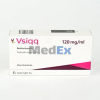
📖 Official Clinical Monograph
DGDA Approved Prescribing GuidelinesVSIQQ is a human vascular endothelial growth factor (VEGF) inhibitor indicated for the treatment of:
Neovascular (Wet) Age-Related Macular Degeneration (AMD)
Diabetic Macular Edema (DME)
Dosage & AdministrationNeovascular (Wet) Age-Related Macular Degeneration (AMD)
: The recommended dose for BEOVU is 6 mg (0.05 mL of 120 mg/mL solution) monthly (approximately every 25-31 days) for the first three doses, followed by one dose of 6 mg (0.05 mL) every 8-12 weeks.
Diabetic Macular Edema (DME)
: The recommended dose for BEOVU is 6 mg (0.05 mL of 120 mg/mL solution) every six weeks (approximately every 39-45 days) for the first five doses, followed by one dose of 6 mg (0.05 mL of 120 mg/mL solution) every 8-12 weeks.
Pediatric Use
: The safety and efficacy of BEOVU in pediatric patients has not been established.
Ocular or Periocular Infections
: Brolucizumab is contraindicated in patients with ocular or periocular infections.
Active Intraocular Inflammation
: Brolucizumab is contraindicated in patients with active intraocular inflammation.
Hypersensitivity
: Brolucizumab is contraindicated in patients with known hypersensitivity to brolucizumab or any of the excipients in Brolucizumab. Hypersensitivity reactions may manifest as rash, pruritus, urticaria, erythema, or severe intraocular inflammation.
The most common adverse reactions reported in patients receiving VSIQQ are vision blurred, cataract, conjunctival hemorrhage, eye pain, and vitreous floaters.
Endophthalmitis and retinal detachment may occur following intravitreal injections. Patients should be instructed to report any symptoms suggestive of endophthalmitis or retinal detachment without delay.
Retinal vasculitis and/or retinal vascular occlusion, typically in the presence of intraocular inflammation, have been reported following BEOVU injections. Patients should be instructed to report any change in vision without delay.
Increases in intraocular pressure (IOP) have been seen within 30 minutes of an intravitreal injection.
There is a potential risk of arterial thromboembolic events (ATE) following intravitreal use of VEGF inhibitors
Brolucizumab is a human VEGF inhibitor. Brolucizumab binds to the three major isoforms of VEGF-A (e.g., VEGF 110, VEGF 121, and VEGF 165), thereby preventing interaction with receptors VEGFR-1 and VEGFR-2. By inhibiting VEGF-A, brolucizumab suppresses endothelial cell proliferation, neovascularization, and vascular permeability. Leakage of blood and fluid from choroidal neovascularization (CNV) may cause retinal thickening or edema. Increased retinal thickness and accumulation of intraretinal fluid (IRF)/subretinal fluid (SRF), assessed by optical coherence tomography (OCT), is associated with nAMD and DME. Reductions in central retinal subfield thickness (CST) were observed across all treatment arms.