Apremilast
💊 Brand Formulations & Prices
11 brands sorted by unit price
Apemilast
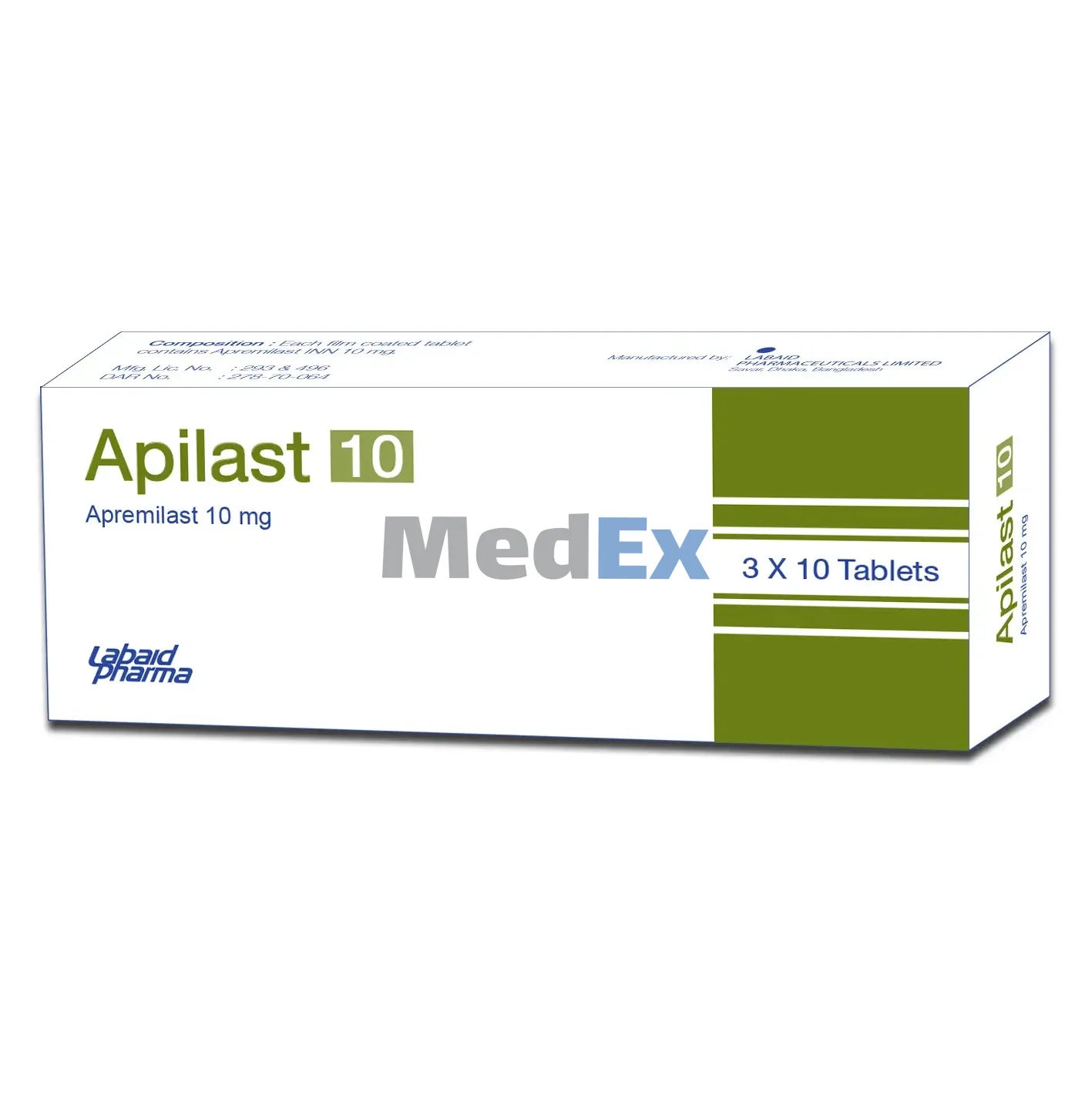
Apilast
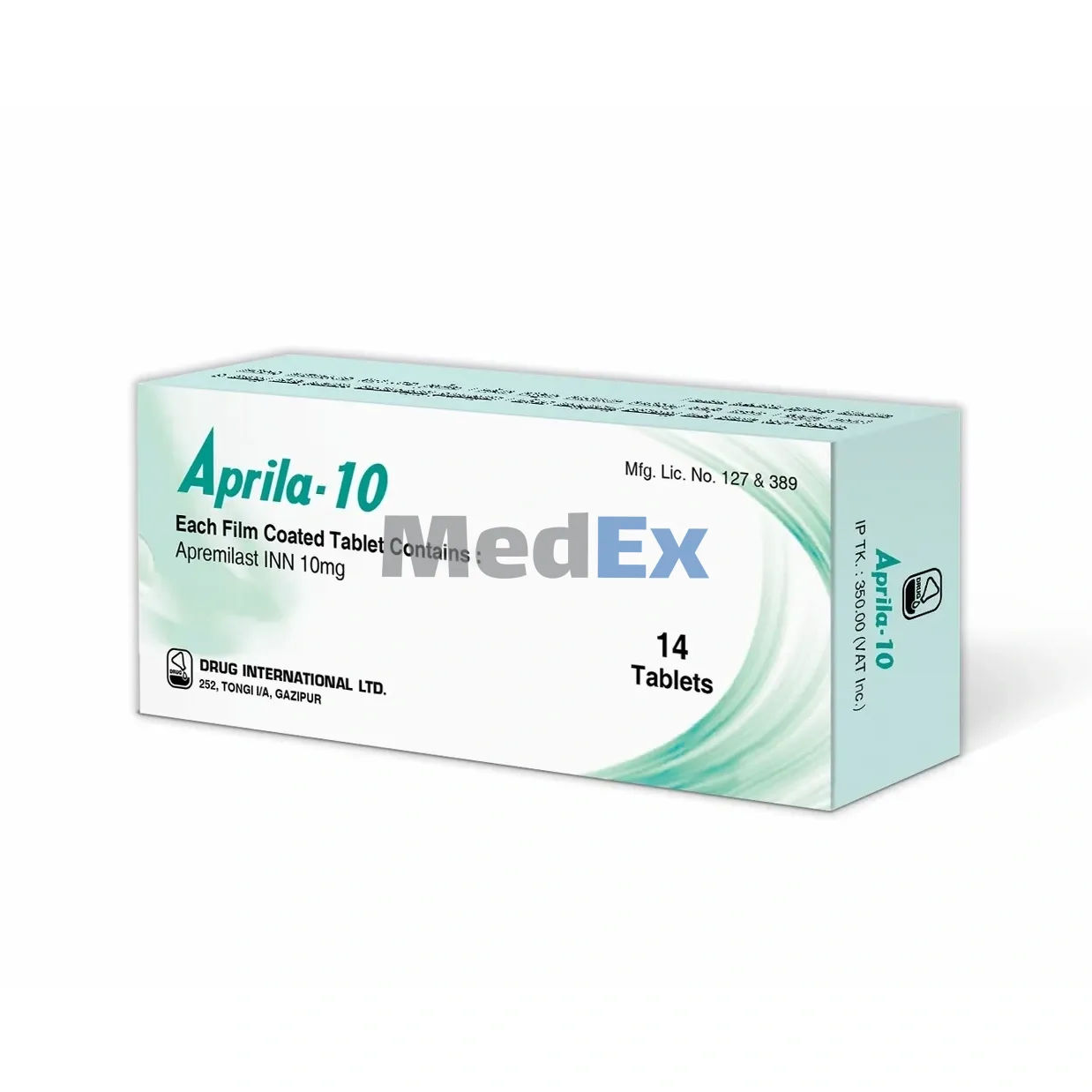
Aprila
Aprima
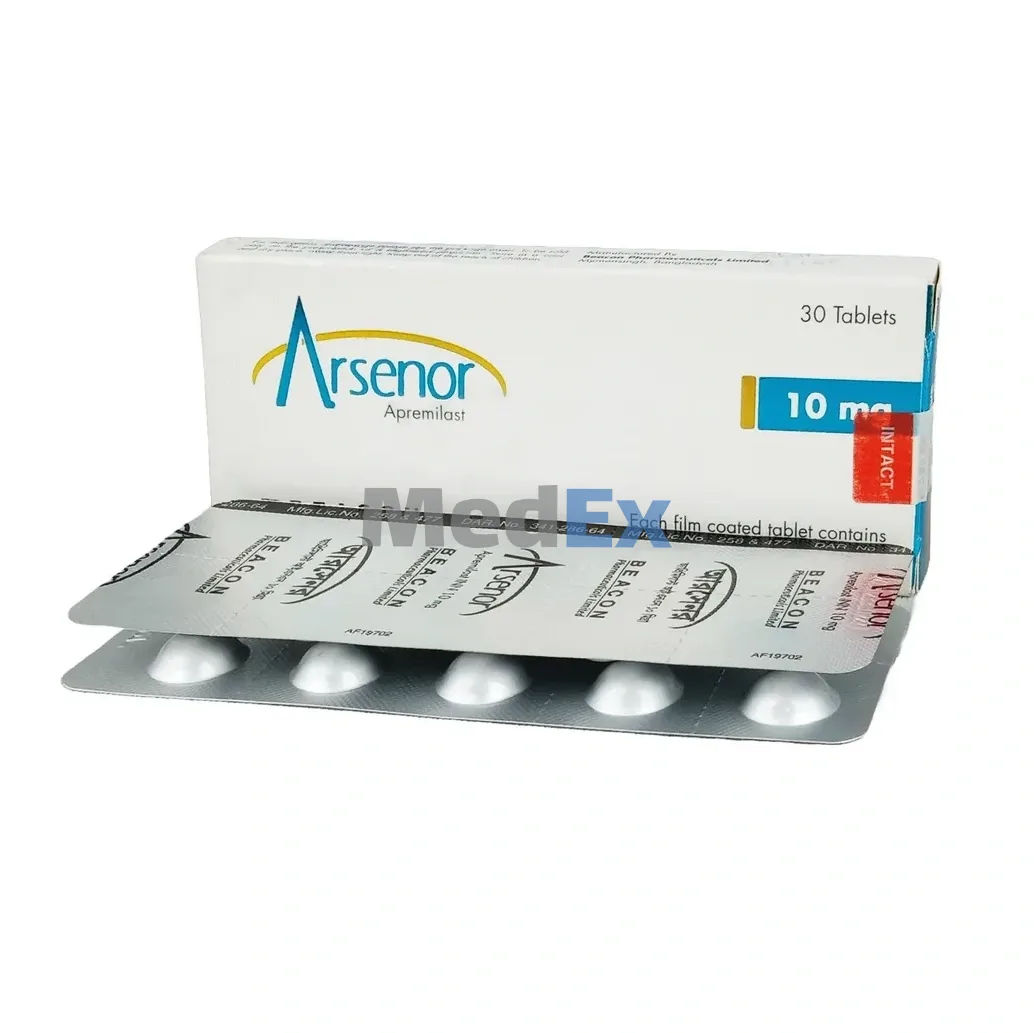
Arsenor
Otelast
Apemilast
Aprila
Aprima
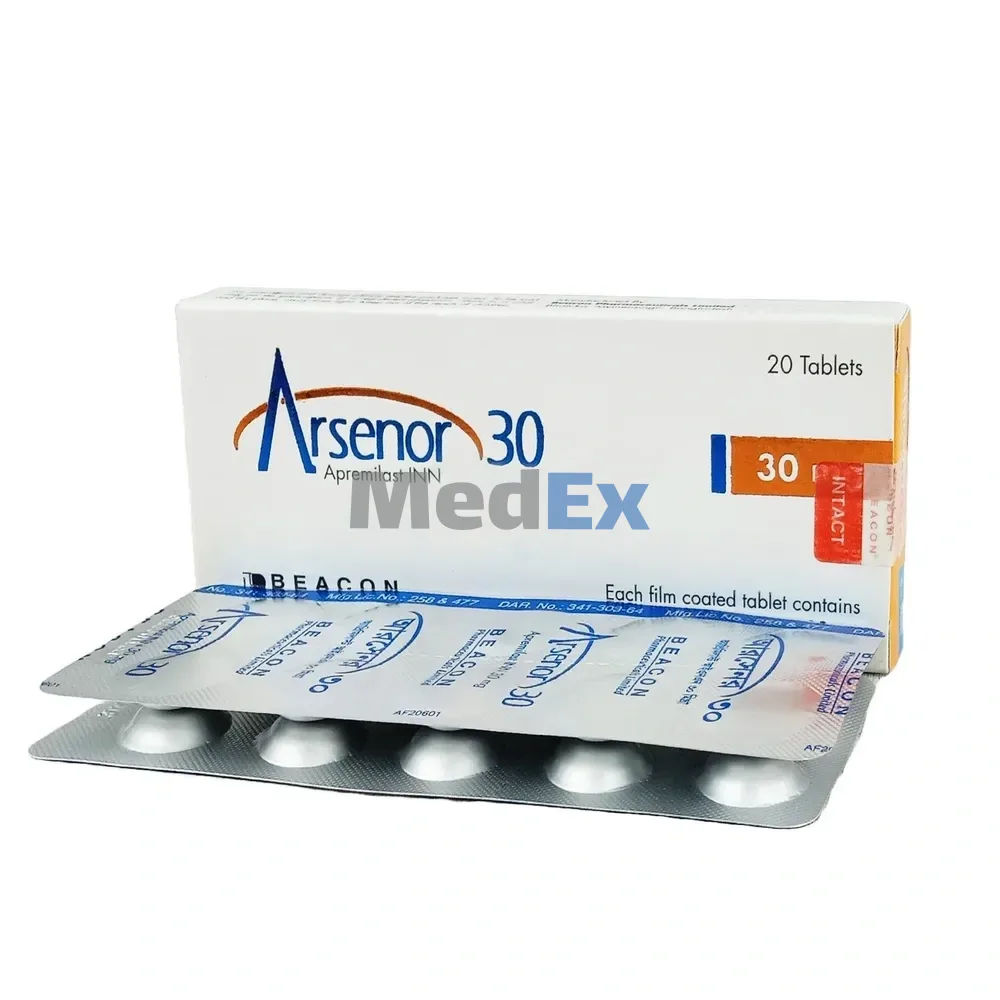
Arsenor
Otelast
📖 Official Clinical Monograph
DGDA Approved Prescribing GuidelinesApemilast is indicated for the treatment of adult patients with active psoriatic arthritis and moderate to severe plaque psoriasis who are candidates for phototherapy or systemic therapy.
The recommended initial dosage titration of Apremilast from Day 1 to Day 5 is shown below. Following the 5-day titration, the recommended maintenance dosage is 30 mg twice daily taken orally starting on Day 6. This titration is intended to reduce the gastrointestinal symptoms associated with initial therapy. Apremilast can be administered without regard to meals.
Day 1
: 10 mg in morning
Day 2
: 10 mg in morning and 10 mg in evening
Day 3
: 10 mg in morning and 20 mg in evening
Day 4
: 20 mg in morning and 20 mg in evening
Day 5
: 20 mg in morning and 30 mg in evening
Day 6
: 30 mg twice daily
Dosage adjustment in patients with severe renal impairment. Apremilast dosage should be reduced to 30 mg once daily in patients with severe renal impairment. For initial dosage titration, it is recommended that Apremilast be titrated using only the morning schedule and the evening doses be skipped.
Apremilast is contraindicated in patients with a known hypersensitivity to Apremilast or to any of the excipients in the formulation.
The most frequently occurring side effects of Apemilast are nausea, diarrhea and headache. Other less frequent side effects are upper respiratory tract infection, vomiting, naospharyngitis, abdominal pain, hypersensitivity, gastroesophageal reflux disease, dyspepsia, fatigue, decrease appetite, cough, rash, insomnia.
Treatment with Apemilast is associated with an increase in adverse reactions of depression. Patients, their caregivers and families should be advised of the need to be alert for the emergence or worsening of depression, suicidal thoughts or other mood changes and if such changes occur to contact their healthcare provider. Prescribers should carefully evaluate the risks and benefits of continuing treatment with Apemilast if such events occur.
During the controlled period of the studies in psoriatic arthritis, weight decrease between 5-10% of body weight was reported in 10% of subjects treated with Apemilast 30 mg twice daily compared to 3.3% treated with placebo.
Apremilast is a novel, orally available small molecule inhibitor of type-4 cyclic nucleotide phosphodiesterase (PDE-4). PDE-4 is a cyclic adenosine monophosphate (cAMP)-specific phosphodiesterase that is predominantly located in inflammatory cells. By inhibiting PDE-4, apremilast increases intracellular levels of cAMP and thereby inhibits the production of multiple proinflammatory mediators including PDE-4, TNF-alpha, interleukin-2 (IL-2), interferon-gamma, leukotrienes, and nitric oxide synthase. By targeting a central component of the inflammatory signaling cascade rather than a single inflammatory marker, PDE-4 inhibition may restore the homeostatic balance between pro- and anti-inflammatory signalling.