Alcaftadine
💊 Brand Formulations & Prices
10 brands sorted by unit price
Acicaft
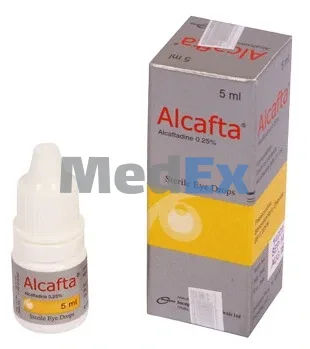
Alcafta
Altadin
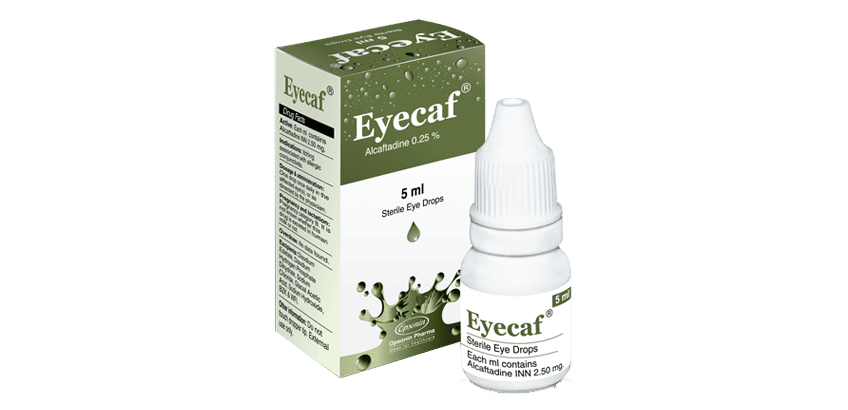
Eyecaf
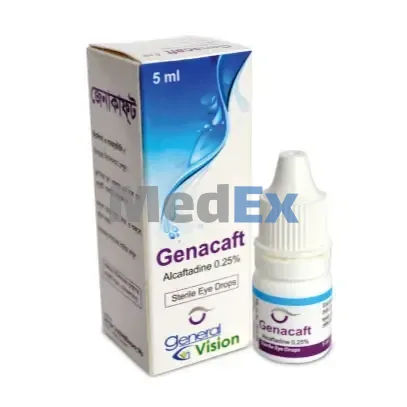
Genacaft
Icaft
Caftalast
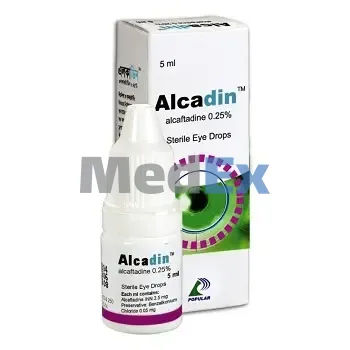
Alcadin
Alcaft
Caftadin
📖 Official Clinical Monograph
DGDA Approved Prescribing GuidelinesAcicaft eye drops is indicated for the prevention of itching associated with allergic conjunctivitis. Acicaft ophthalmic solution is an H1 receptor antagonist, in a sterile ophthalmic solution for topical ophthalmic use.
Adults and children 2 years and over: Instill one drop in each eye once daily.
Alcaftadine is contraindicated in patients with hypersensitivity to any component in the product.
The most frequent ocular reactions are eye irritation, burning or/and stinging upon instillation, eye redness and eye pruritus, nasopharyngitis and headache.
To minimize eye injury and contamination of the dropper tip and solution, care should be taken not to touch the eyelids or surrounding areas with the dropper tip of the bottle. Patients should be advised not to wear a contact lens if their eye is red. Acicaft should not be used to treat contact lens related irritation and should not be instilled while wearing contact lenses. Remove contact lenses prior to instillation Acicaft. Lenses may be reinserted after 10 minutes following administration. If more than 1 topical ophthalmic medicinal product is being used, each one should be administered at least 5 minutes apart.
This eye drops is a sterile topical ophthalmic solution containing Alcaftadine. Alcaftadine is an histamine receptor antagonist and inhibitor of the release of histamine from mast cell. It is also a potent histamine H2 and H4 receptor antagonist that has demonstrated anti-inflammatory property. In doing so, antihistaminic effect provides relief from itching associated with early phase of ocular allergic response, whereas mast cell stabilization inhibits the release of mediators such as cytokines and lipid mediators that play a role in late-phase response of allergic conjunctivitis.