 Oshud
Oshud17 β Estradiol
 Brands & Prices (1)
📋 Indications & Uses Dosage & Administration⚠️ Contraindications🔬 Pharmacology & Mechanism
Brands & Prices (1)
📋 Indications & Uses Dosage & Administration⚠️ Contraindications🔬 Pharmacology & Mechanism
Brand Formulations & Prices
1 brands sorted by unit price
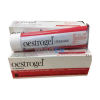
📖 Official Clinical Monograph
DGDA Approved Prescribing GuidelinesTreatment of Moderate to Severe-
Vasomotor Symptoms due to Menopause.
Symptoms of Vulvar and Vaginal Atrophy due to Menopause.
Dosage & AdministrationGenerally, when estrogen is prescribed for a postmenopausal woman with a uterus, consider addition of a progestogen to reduce the risk of endometrial cancer. Generally, a woman without a uterus does not need to use a progestogen in addition to her estrogen therapy. In some cases, however, hysterectomized women with a history of endometriosis may need a progestogen.
Use estrogen-alone, or in combination with a progestogen at the lowest effective dose and for the shortest duration consistent with treatment goals and risks for the individual woman. Reevaluate postmenopausal women periodically as clinically appropriate to determine if treatment is still necessary.
Treatment of Moderate to Severe Vasomotor Symptoms due to Menopause
: Estradiol 0.06% 1.25 g per day is the single approved dose for the treatment of moderate to severe vasomotor symptoms due to menopause. The lowest effective dose of Estradiol 0.06% for this indication has not been determined. Before using the canister for the first time, it must be primed. Remove the large canister cover, and fully depress the pump 5 times Discard the unused gel by thoroughly rinsing down the sink or placing it in the household trash. After priming, the pump is ready to use. The recommended area of application is the arm. Apply a thin layer over the entire arm on the inside and outside from wrist to shoulder.
Treatment of Moderate to Severe Symptoms of Vulvar and Vaginal Atrophy due to Menopause
: Estradiol 0.06% 1.25 g per day is the single approved dose for the treatment of moderate to severe symptoms of vulvar and vaginal atrophy due to menopause. The lowest effective dose of Estradiol 0.06% for this indication has not been determined. When prescribing solely for the treatment of moderate to severe symptoms of vulvar and vaginal atrophy, first consider the use of topical vaginal products. Before using the canister for the first time, it must be primed. Remove the large canister cover, and fully depress the pump 5 times. Discard the unused gel by thoroughly rinsing down the sink or placing it in the household trash. After priming, the pump is ready to use. The recommended area of application is the arm. Apply a thin layer over the entire arm on the inside and outside from wrist to shoulder.
Estradiol is contraindicated in women with any of the following conditions:
Undiagnosed abnormal genital bleeding
Breast cancer or a history of breast cancer
Estrogen-dependent neoplasia
Active DVT, PE, or history of these conditions
Active arterial thromboembolic disease (for example, stroke or MI), or a history of these conditions
Known anaphylactic reaction, angioedema, or hypersensitivity to Estradiol
Hepatic impairment or disease
Protein C, protein S, or antithrombin deficiency, or other known thrombophilic disorders
Endogenous estrogens are largely responsible for the development and maintenance of the female reproductive system and secondary sexual characteristics. Although circulating estrogens exist in a dynamic equilibrium of metabolic interconversions, estradiol is the principal intracellular human estrogen and is substantially more potent than its metabolites, estrone and estriol, at the receptor level. The primary source of estrogen in normally cycling adult women is the ovarian follicle, which secretes 70 to 500 mcg of estradiol daily, depending on the phase of the menstrual cycle. After menopause, most endogenous estrogen is produced by conversion of androstenedione, secreted by the adrenal cortex, to estrone in the peripheral tissues. Thus, estrone and the sulfate-conjugated form, estrone sulfate, are the most abundant circulating estrogens in postmenopausal women. Estrogens act through binding to nuclear receptors in estrogen-responsive tissues. To date, 2 estrogen receptors have been identified. These vary in proportion from tissue to tissue. Circulating estrogens modulate the pituitary secretion of the gonadotropins, luteinizing hormone (LH) and FSH through a negative feedback mechanism. Estrogens act to reduce the elevated levels of these hormones seen in postmenopausal women.